Waterfalls and Stone Stacks

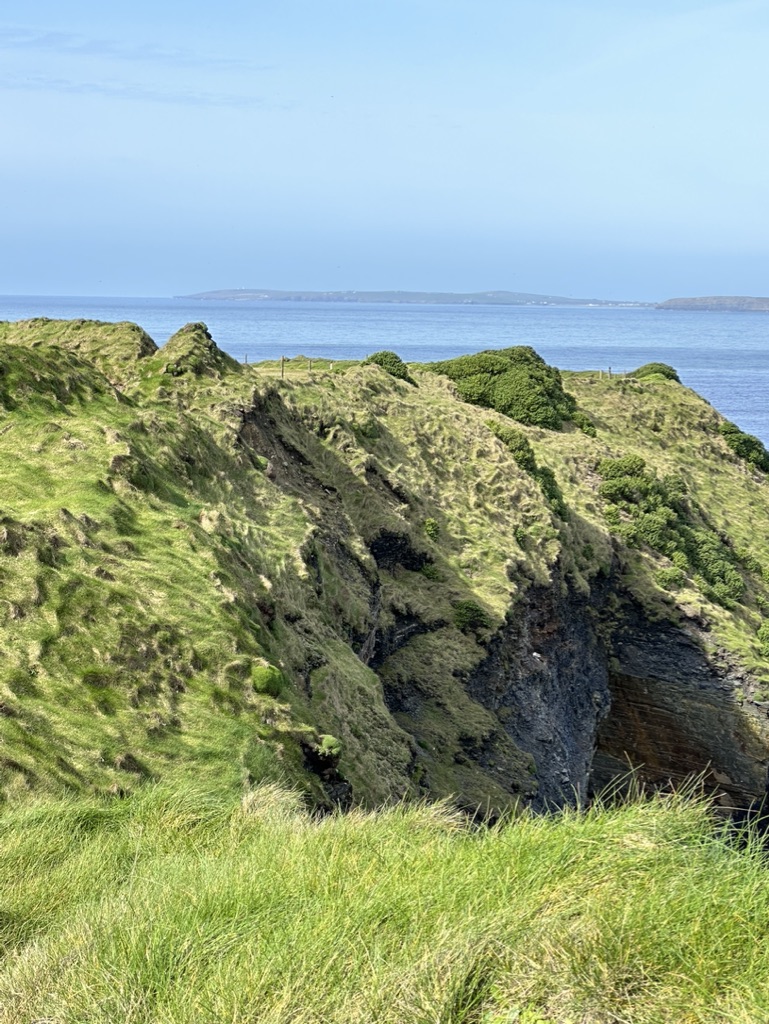
Above: Waterfalls on Garnish Island, Glengarriff, Beara Peninsula in County Cork

As I was beginning to pack for my trip to Ireland, I checked on the journey of friends already there. They stayed a few days after their residency and took the opportunity to study the art of stone stacking. Did you know that the rampant stone borders all across Ireland hold no mortar? Not a drop. And yet stacked stone walls across this land are ubiquitous, hardy, beautiful, and seem to last forever (in reality, 100 – 200 years).

How do they do it?

There’s no secret really — it’s simply the mindset.

While packing, I was also yearning to revisit a site I saw only momentarily several years ago — wondering how I could get back there and, more importantly, where exactly it might have been. It was a lovely spot that I hadn’t been able to get out of my mind for several years.

It was, of course, the the exact location where my friends had returned to build magical walls.

I like to call these intersections freak coincidences, but they are likely neither freakish nor coincidence. They are simply what they were meant to be.

And so I find myself wondering again and again —

What exactly is coincidence? Is it Fate? Chance? Will? Calling?

And if I was called to this village of 140 people once, answered the call, and then felt called again to the very same place on this planet, what does that mean?

What am I here to learn?

And am I learning it?

Does it call to you as well?

Below: It’s estimated that the Irish countryside has over 400,000km of dry-stone walls, and many of those still standing were built during the Irish Famine, less than 200 years ago. The walls were built to separate and protect crop fields as well as to create separate fields for livestock grazing.

Inspired by a month-long artist residency graciously provided by Olive Stack Gallery, Listowel, Ireland

Starry Night


Into this night

of stars two thousand-fold,

I burrow in to join

the dance of darkness

versus light,

of days spent courting night,

of spiraling constellations rapt

in silent dialogue,

and drift into a joy

unparalleled.

And this I know

deep down inside:

that in these star-struck

moments,

true life lives.


© Pam Goode

Inspired by a month-long artist residency graciously provided by Olive Stack Gallery, Listowel, Ireland

Cake Dance Anyone?


Disclaimer: Since I’ve never celebrated Easter in Ireland, I’ve done a bit of (ahem) research. If you’re Irish, let me know how far off I am!

The Prequel

By Easter Saturday, the people of Ireland have had their fill of fish, and butchers are delighted that meat can be consumed again. To celebrate, local butchers host a ceremony known as Whipping the Herring Out of Town — a ‘funeral’ for the fish most widely consumed during Lent in Ireland. A procession through the streets involves hanging a dead fish from a stick that everyone whips with a birch broom. Once the butchers reach the nearest lake or river, they toss the herring into the water. Um, okay.


Traditional Foods

Traditional foods served on Easter Sunday in Ireland include leek soup, roast spring lamb, corned beef, baked ham and boiled bacon. These would be served with cabbage and potatoes. Vegetarians beware.

Cluideog

Today, children join in an Irish custom called cluideog. (NOTE: Please don’t ask me how to pronounce it.) This involves singing and dancing for the family and neighbors in the hope of receiving gifts of raw eggs. Children then gather in a field and cook the eggs over a fire. The remaining eggshells are used to decorate and hang on the May Bush the first of May. (Note: I have no clue what a May Bush is, but I can roll with it.) In Ireland, May Day – also curiously known as Bealtaine – is a traditional Celtic festival celebrating the arrival of summer.

Easter Egg Hunt

The Irish Easter bunny brings Easter eggs for the children, as you may have predicted, and the bunny hides both decorated and chocolate eggs for children to find. Easter egg hunts can be traced 17th century Germany (and I daresay will never end). Named for the Anglo-Saxon goddess of spring, Eostre, her association with hares and eggs represent fertility and plenty. In German folklore, Eostre transformed a bird into a hare and, in gratitude, the hare used its original bird function to lay eggs for the goddess on her feast day, Easter Sunday.


The Cake Dance
NOTE:
This will, of course, be my favorite.

The cake dance is a competitive Irish custom that dates back to mediaeval times but is probably much, much older. It involves a dance-off and the winner takes the cake, quite literally. YUM! The cake is usually a barmbrack (a sweet, eggy cake with sultanas and raisins) placed prominently on a piece of Irish linen. Queue the music, and the dancing is on! The winning dancer is likely to be the one who exerts the most effort or dances the longest. I find it rather charming that skill doesn’t seem to be an issue.

Charmingly, the Irish Easter tradition of the cake dance was practiced well into the 20th-century. Gotta say, I could go for a cake dance any day.

Inspired by a month-long artist residency graciously provided by Olive Stack Gallery, Listowel, Ireland

At the Grocery: The Good, the Bad, and the Curious

Now let me say up front that I’ve found no food anywhere on the planet that matches the sheer bliss of Irish food. All organic, all clean, all fresh, and I just can’t get enough. Honestly, I wish everyone had the opportunity to eat this cleanly. That said, the Irish do have their quirks!

Left to Right and Top to Bottom:

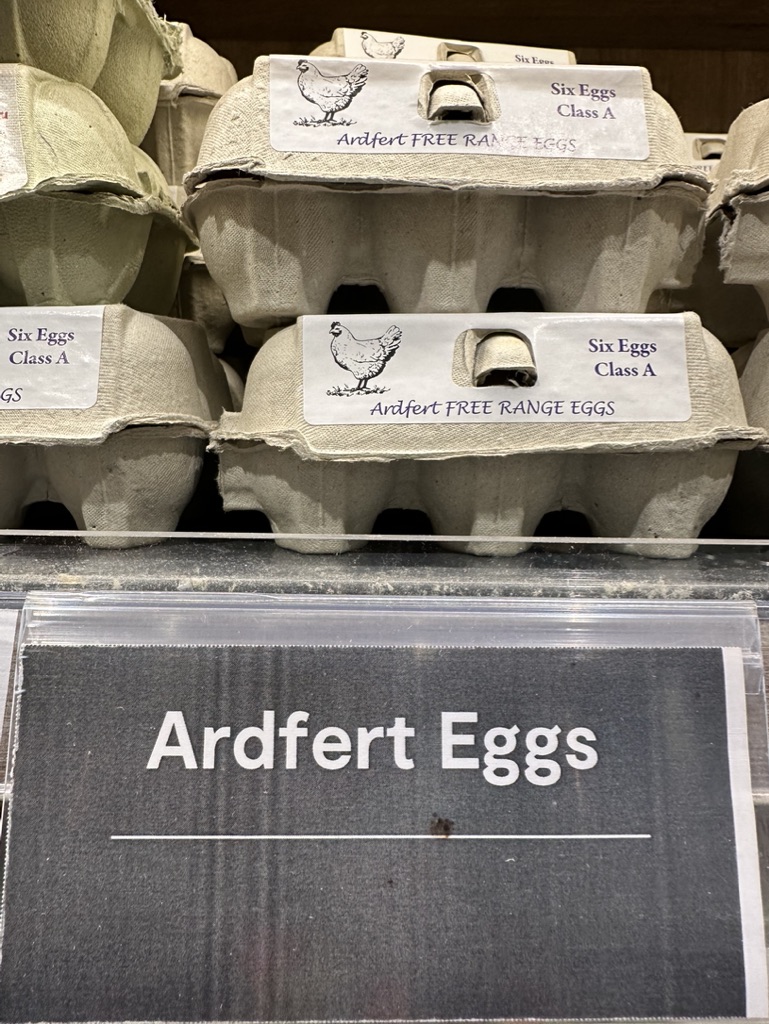
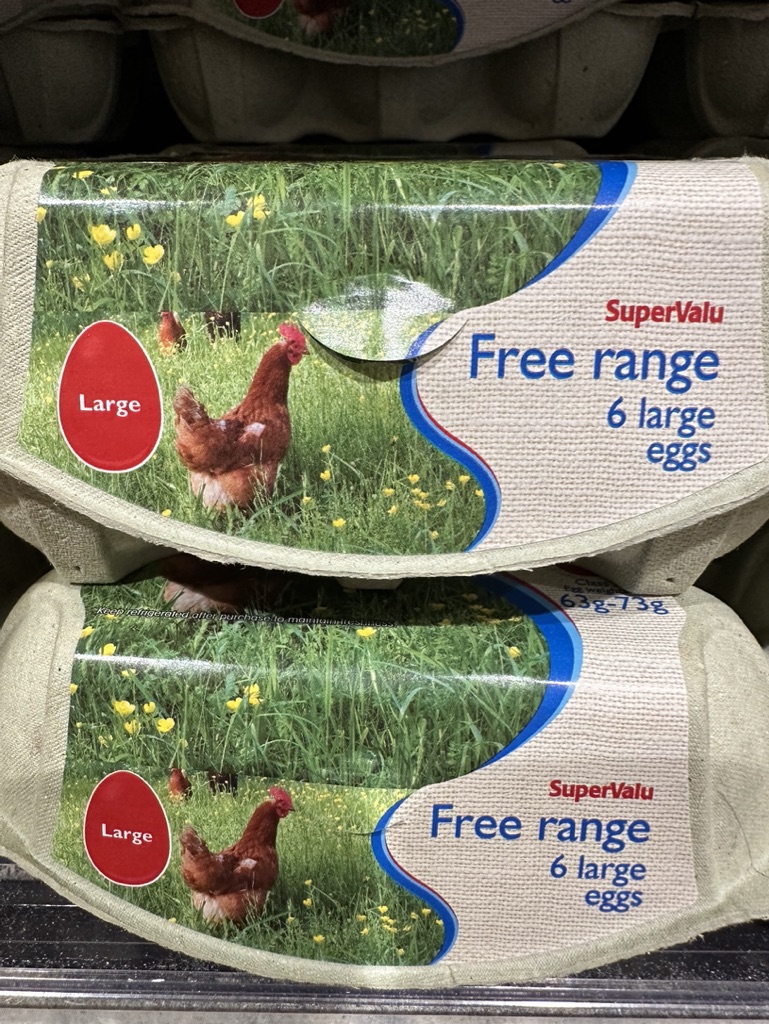
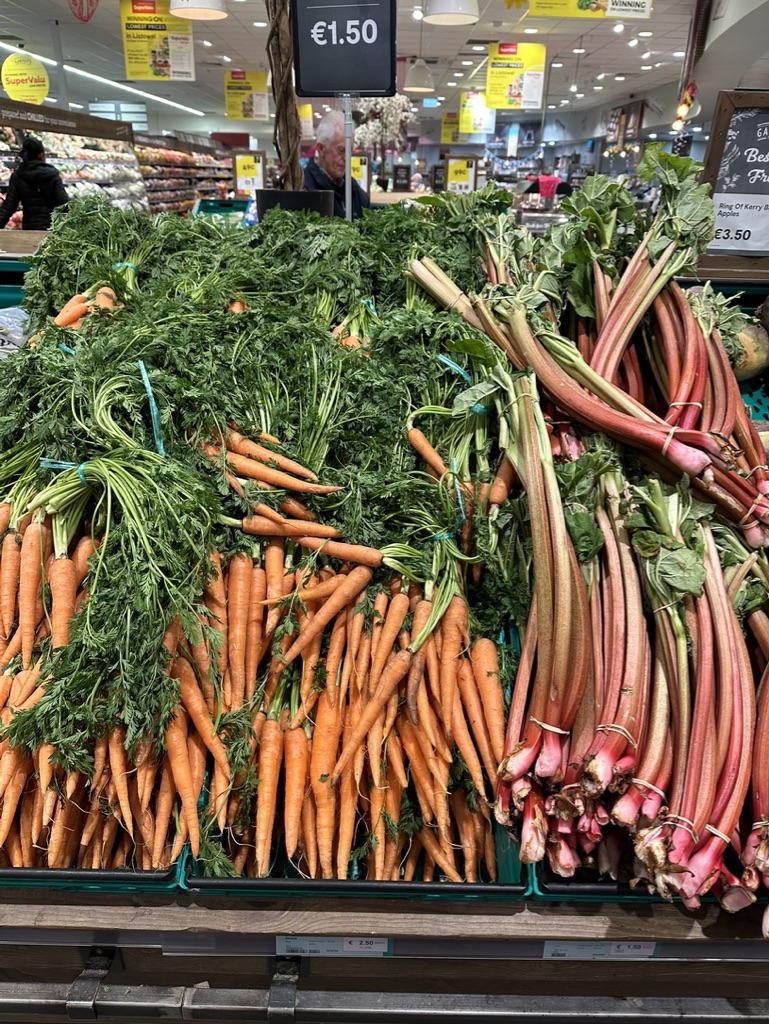
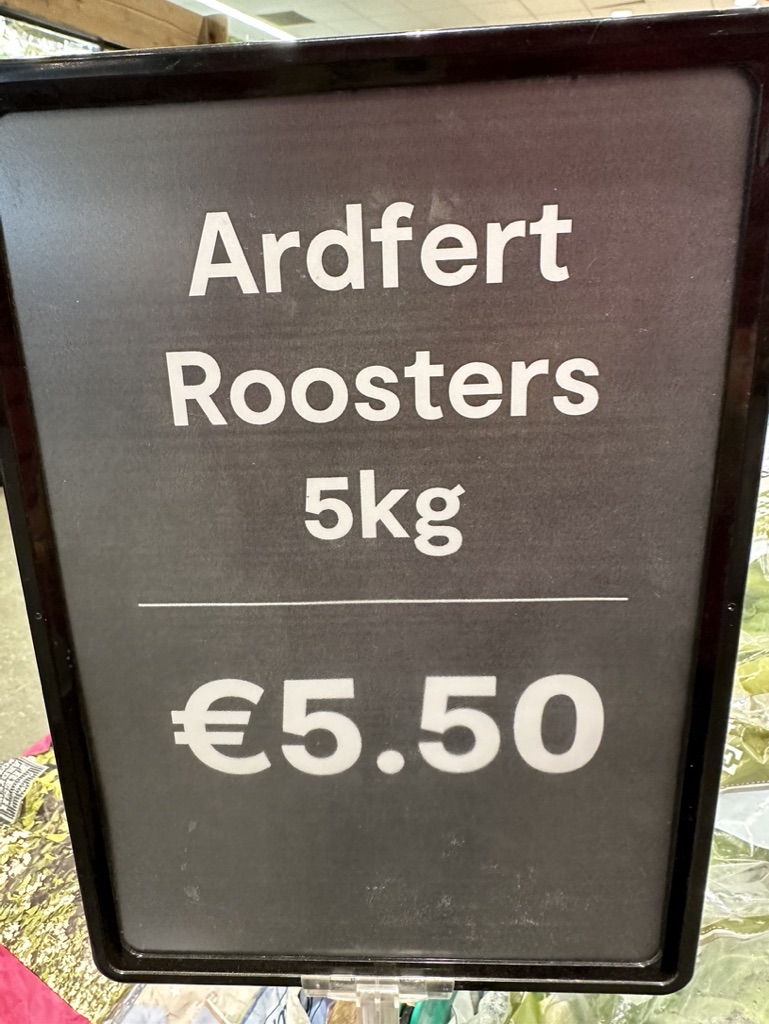
SERIOUSLY Plant Based Chicken; The Happy Pear … ???; Jelly (or Jello?) in plastic tubs ???; Carrots and Rhubarb (LOTS of Carrots and Rhubarb), which is clearly the favorite local veggie!; Ardfert Roosters … scratching head ….; Orange Juice … with Bits???; Ardfert Eggs … Presumably these go with the roosters in some sense; Random display of a tent, some lovies, and a very large purple flower, none of which you can really access if they strike your fancy; SIX Free Range Eggs with a lively scene displayed. After some consideration, we’ve determined that SIX is the perfect number of eggs to buy at a go. Very smart indeed.

Inspired by a month-long artist residency graciously provided by Olive Stack Gallery, Listowel, Ireland

Grange Stone Circle, Part 2

Following up on my brief visit to the The Grange Stone Circle at Lough Gur, I can promise you that the lives of these stones go way beyond anything we’ll ever realize. Some of it glorious, some decadent, some tragic, some probably maudlin, but forever enticing and magical.

And let’s face it — it’s hard to beat a tree that has grown through two 6,000 year old rocks AND is still sprouting leaves and limbs!

Did I say Magic?

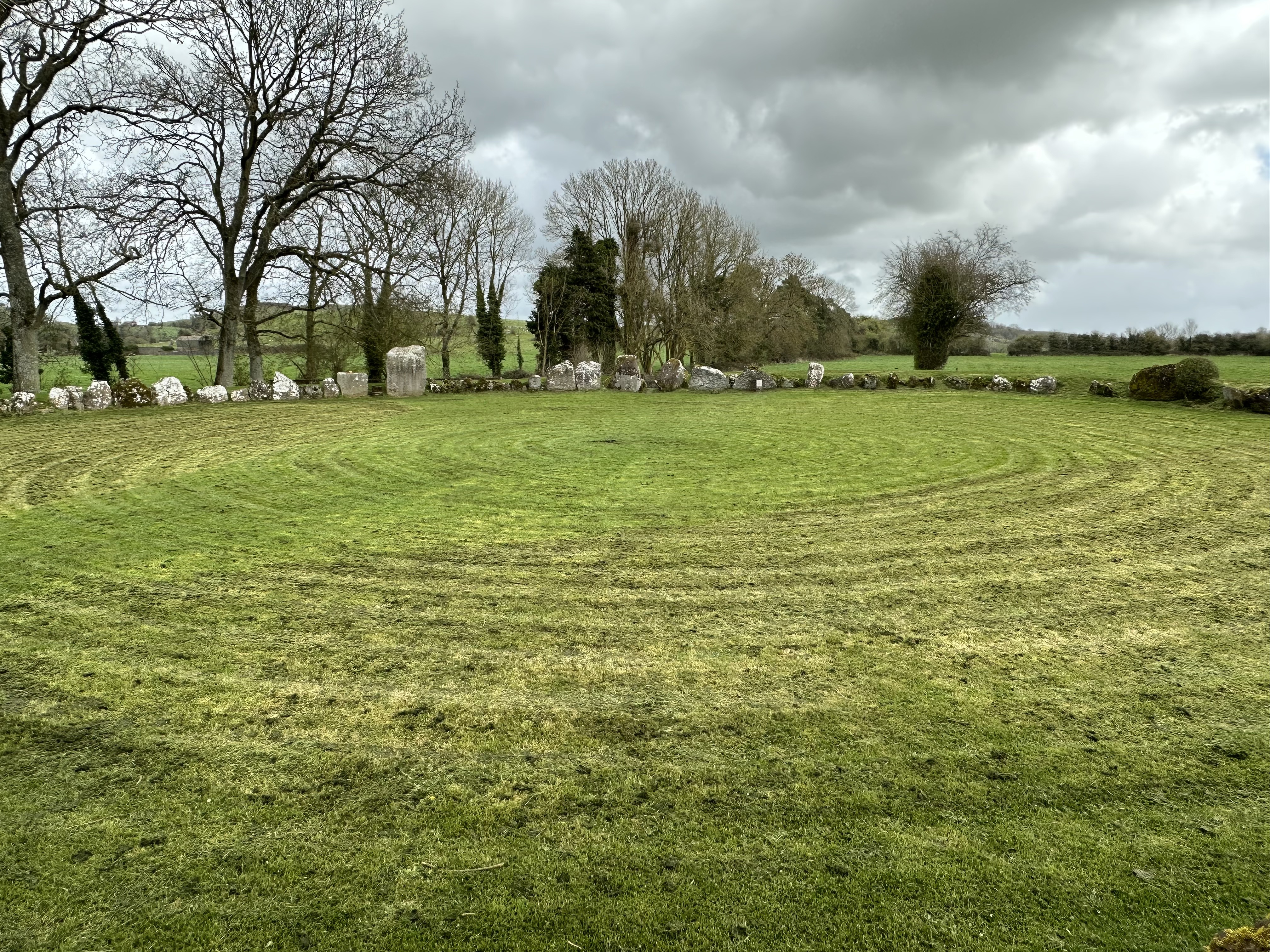
The circle has an internal diameter of approximately 46 meters (151 feet), or a bit under half the length of a football field.

If you want to visit, Grange Stone Circle is in County Limerick, Ireland, located 300m west of Lough Gur, 4 km north of Bruff. The Limerick-Kilmallock road is nearby. Between the landscape and the history, you definitely get the bang for your buck (which is free).

Not shown but easily visible to the eye if you’re on site, are trinkets left inside surrounding trees. Some of the trees have openings that run fairly deep, and are lightly adorned with ribbons, messages, or, in at least one case, a sweet little pink ornament.

Magic indeed.

Inspired by a month-long artist residency graciously provided by Olive Stack Gallery, Listowel, County Kerry, Ireland.

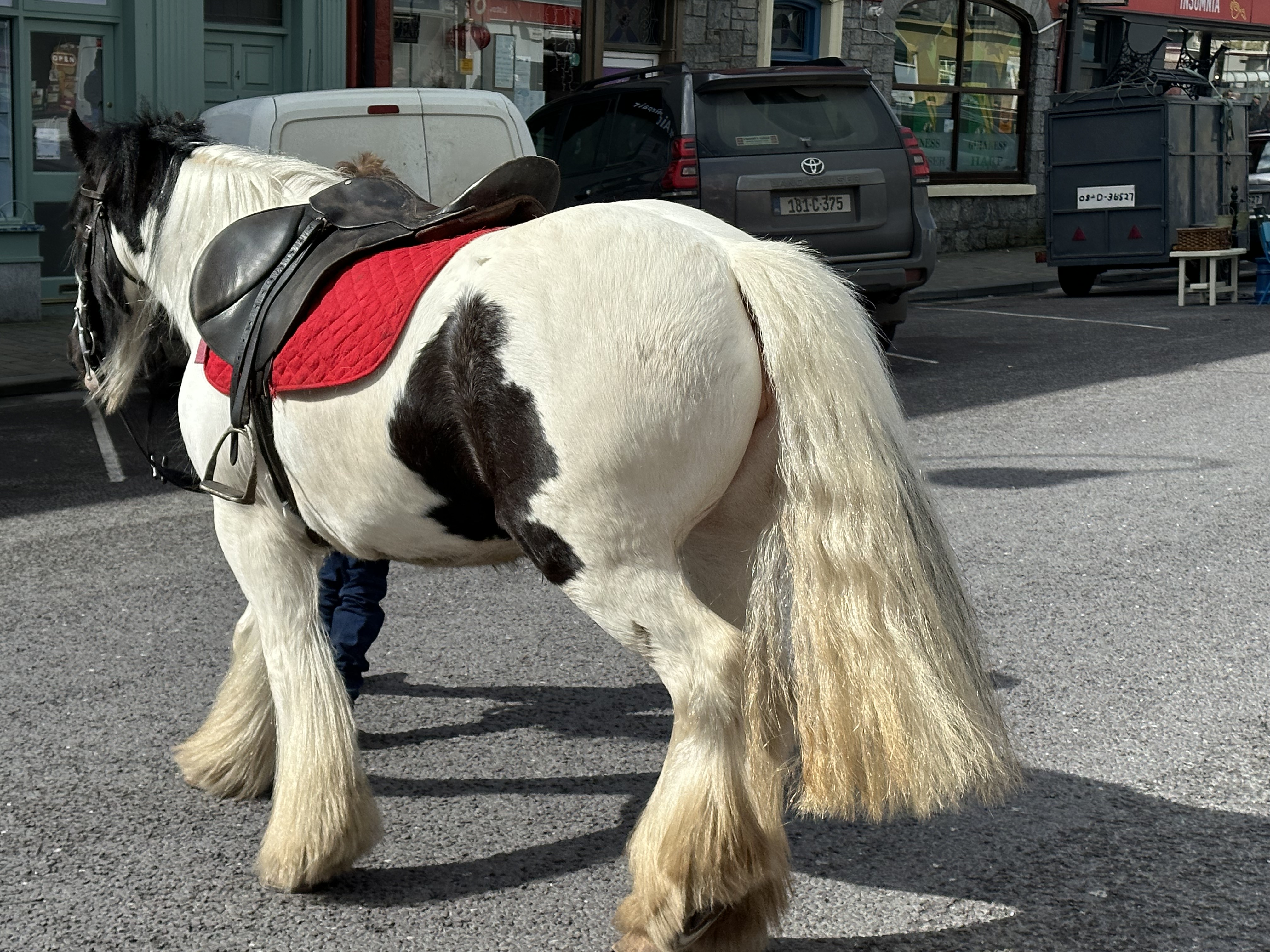
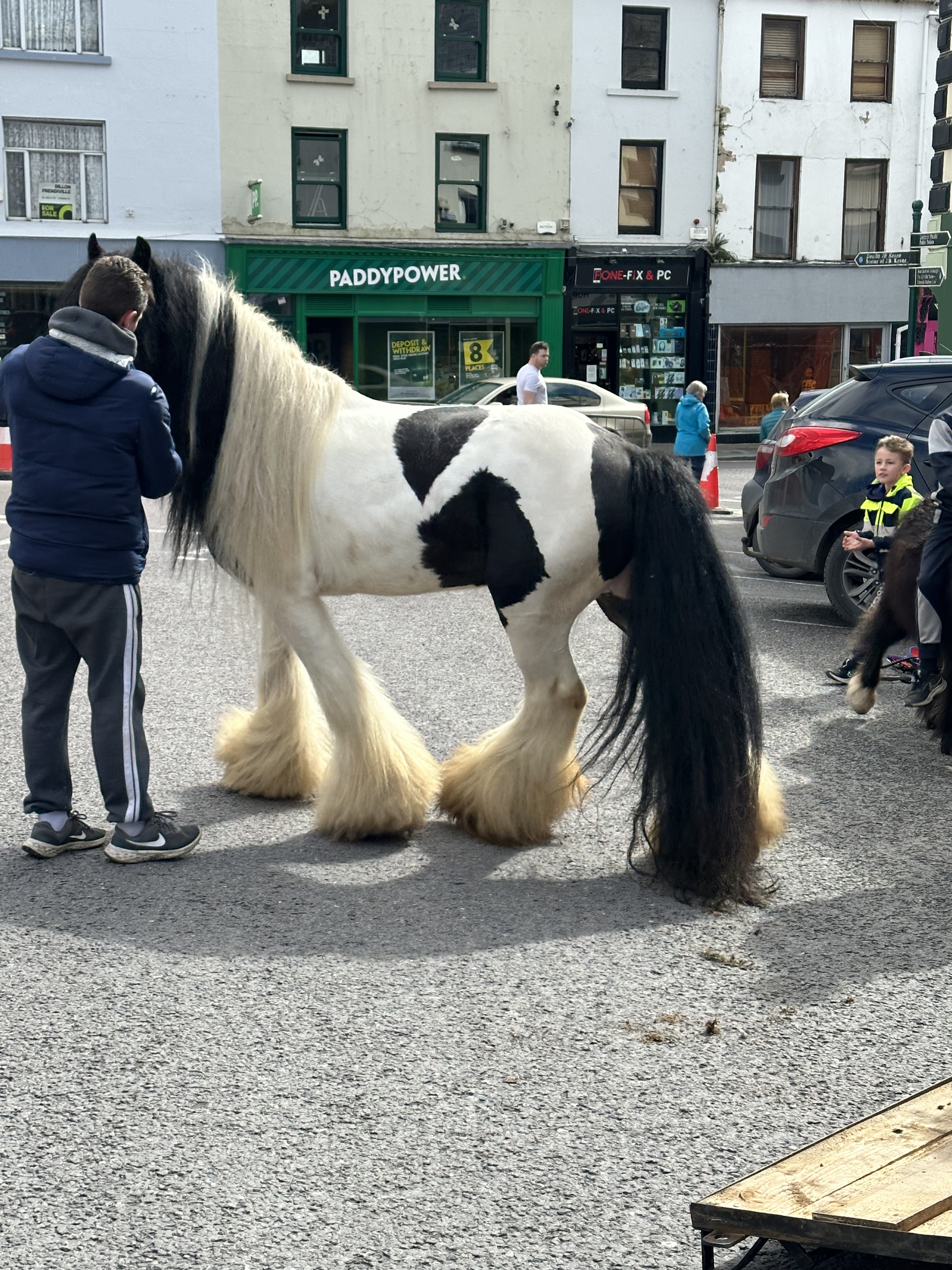
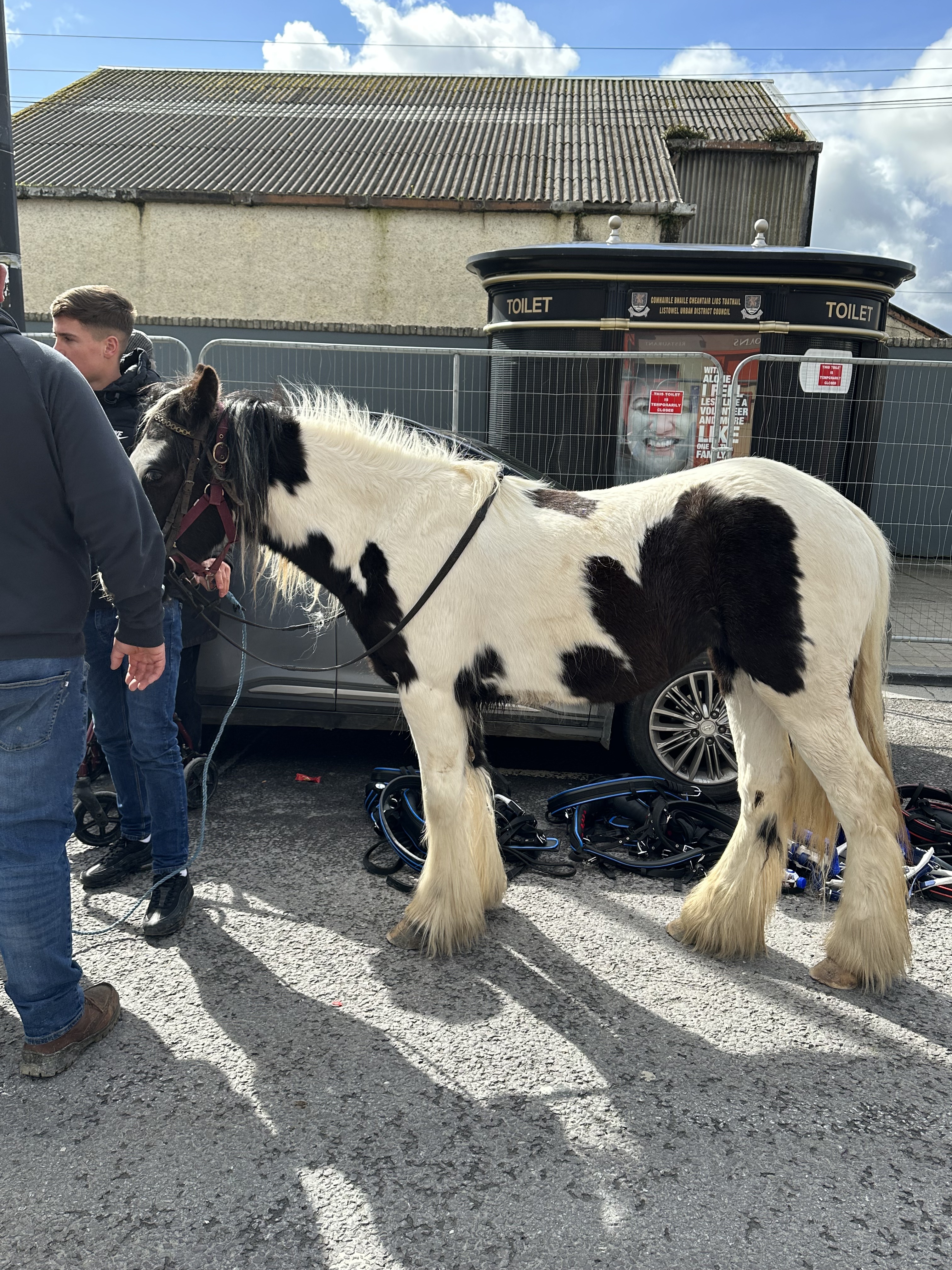
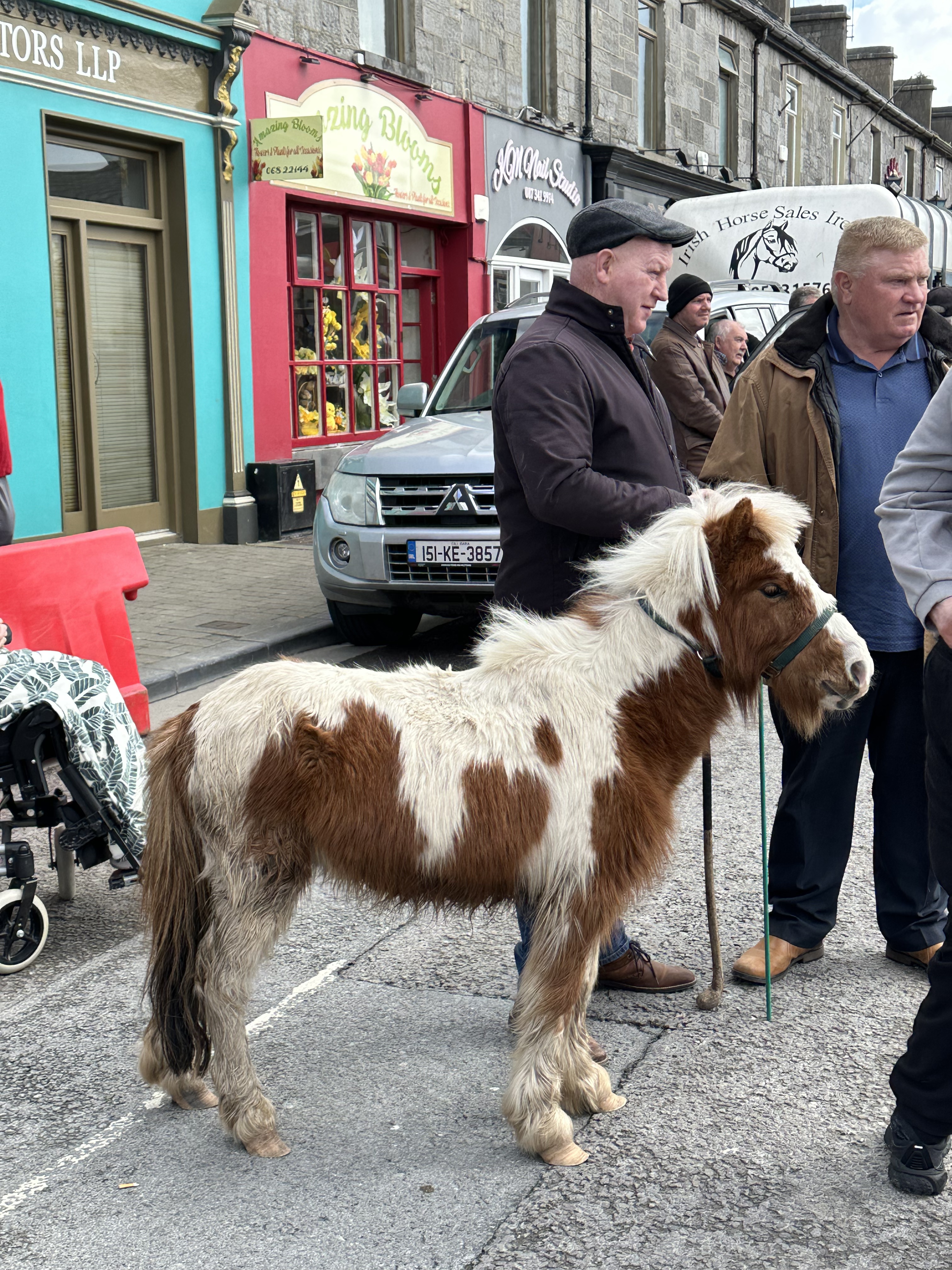
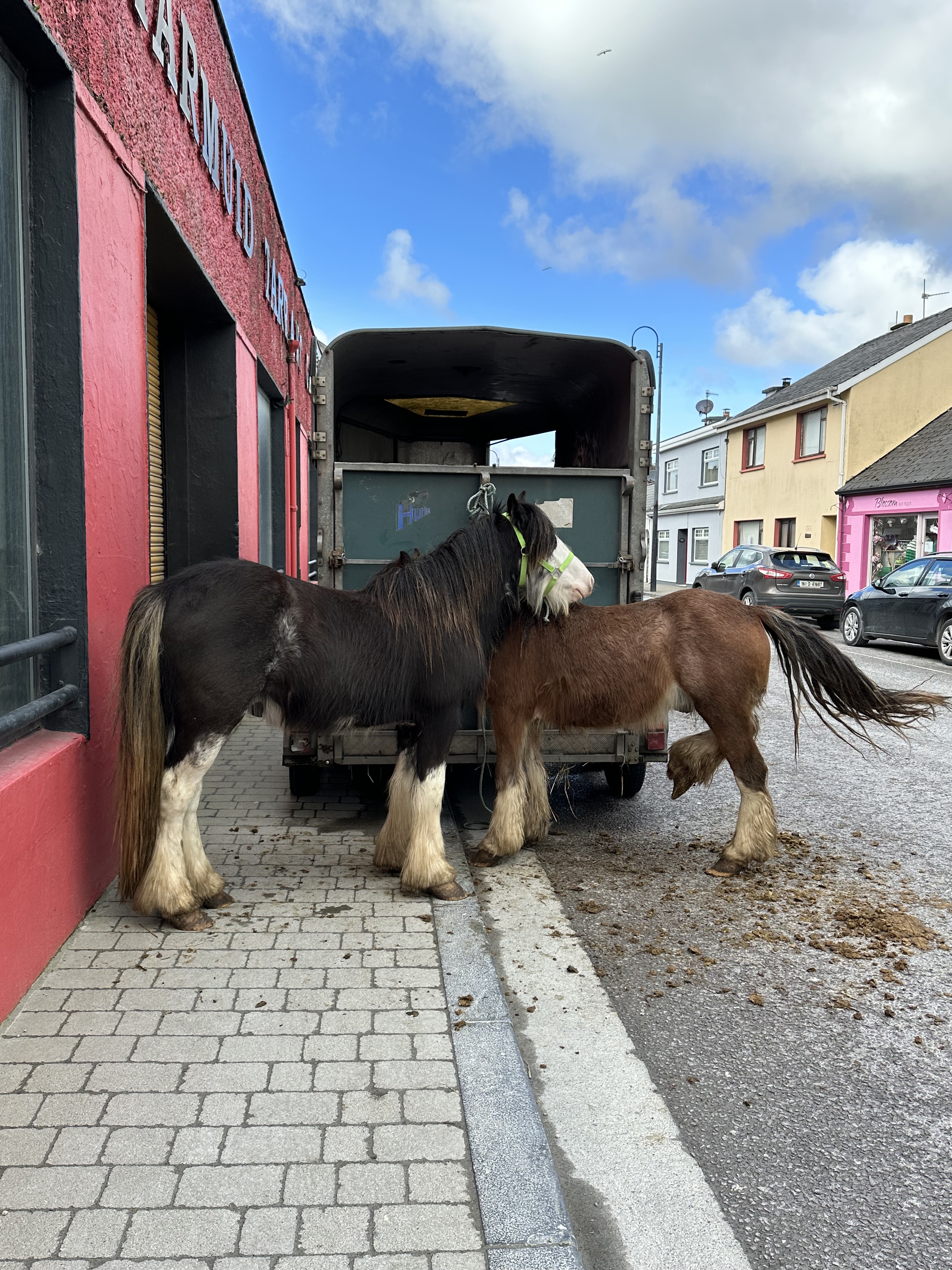
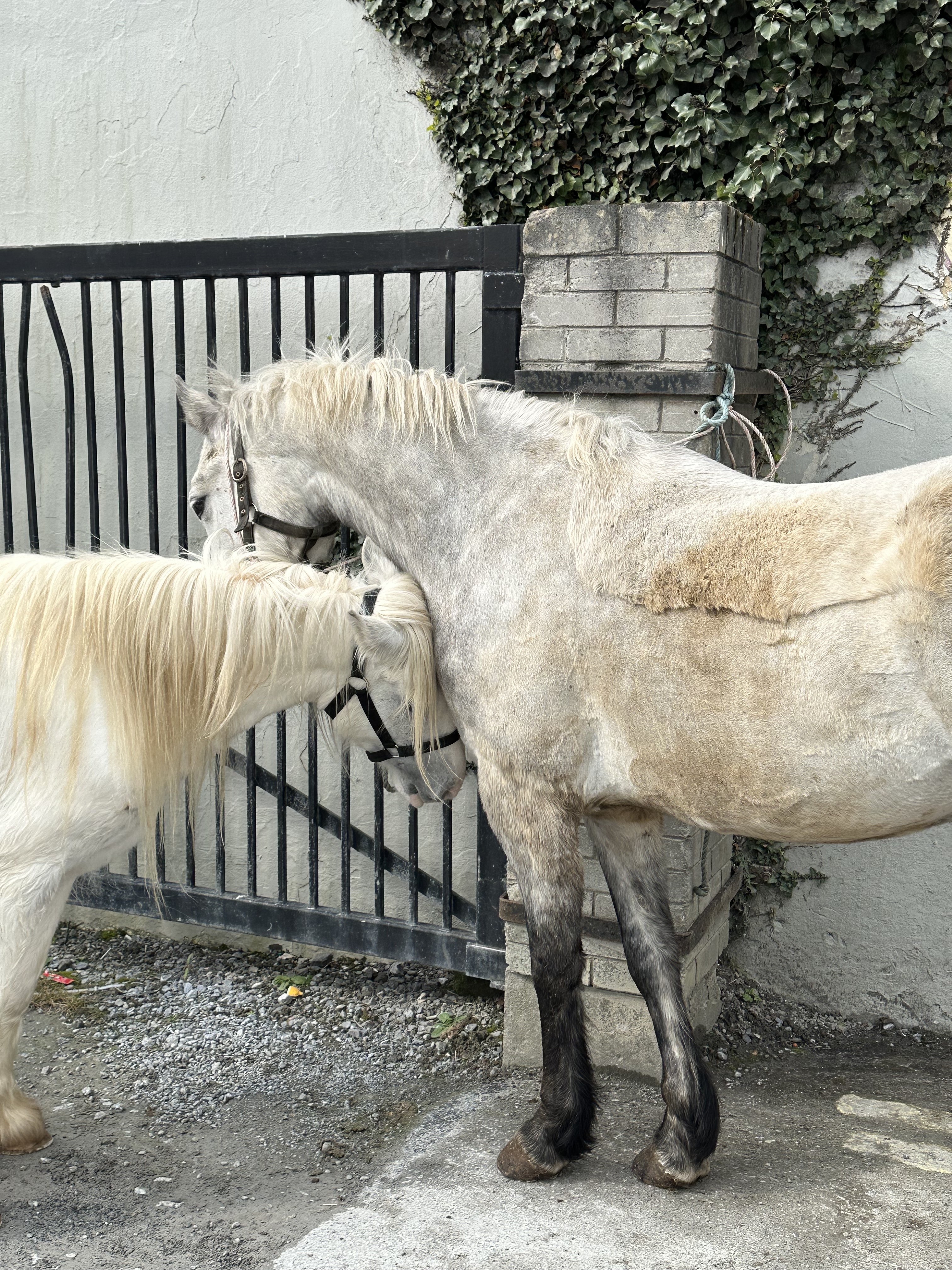
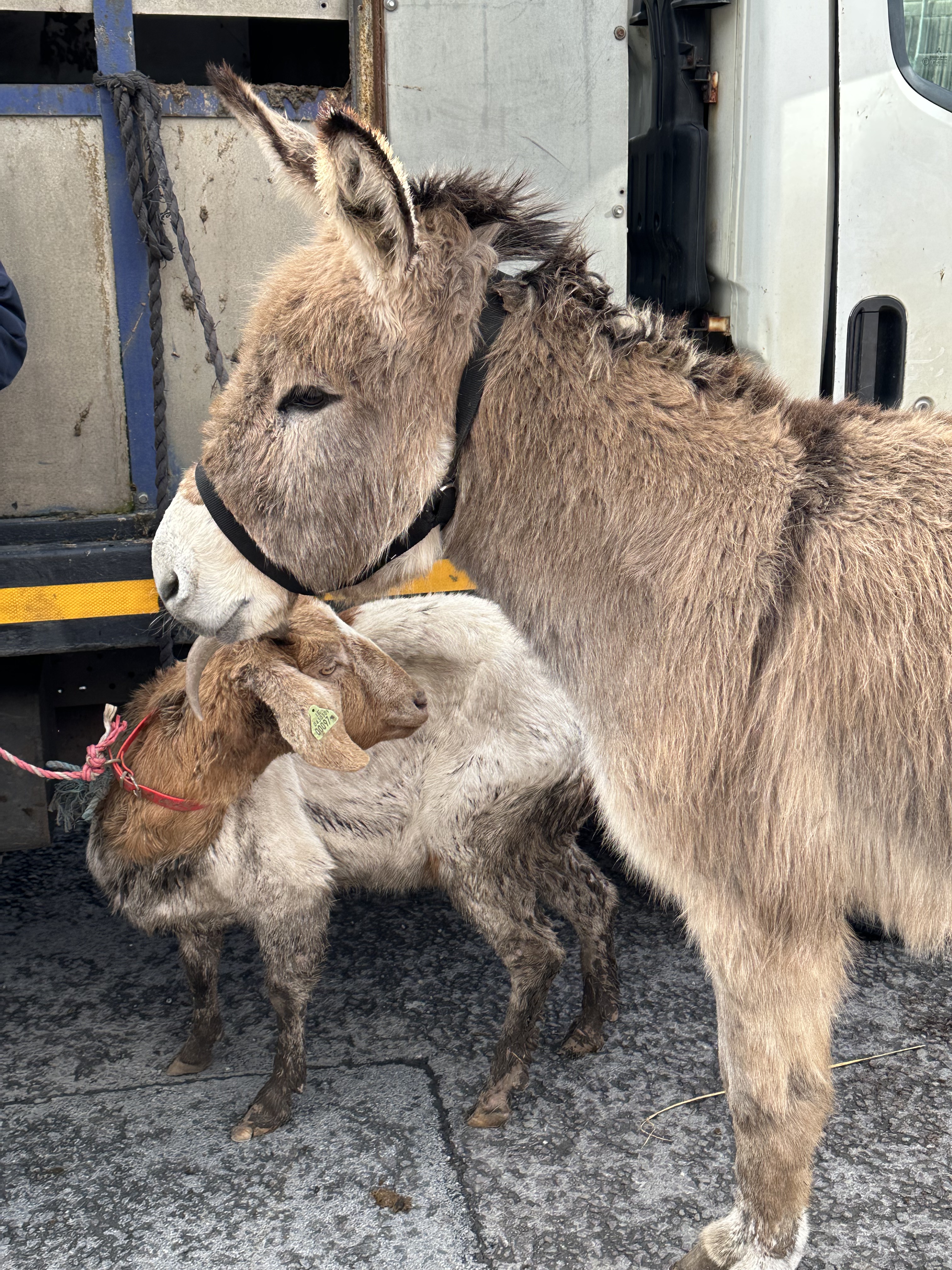
It’s Pony Day in Listowel!

We interrupt our regularly scheduled programming due to a special event.

The ponies and goats, burros and majestic beasts, and curious onlookers are out in full force today, prancing their pretties.

And it’s a show, let me tell you! You don’t really need my commentary, so let’s dive in!

Inspired by a month-long artist residency graciously provided by Olive Stack Gallery, Listowel, Ireland
Moons and Junes and Afternoons

A little tea and scone break for one at two? I do believe so. In fact, let’s dive in, shall we?

The tea is lusciously served with an ample bowl of cream and a full jar of sugar. We call that Irish Perfection.

The wifi is ….. non-existent ….. but the company, well, the company excels. To be honest, wi-fi is a full-fleged conversation stopper, though quite possibly not for the Irish.

There’s something to be said for a room full of men and women — well actually, 18 women and three men — all talking animatedly at once. I hear the chatter of course, as the Irish are nothing if not friendly and joyously, perhaps even more than joyously, animated, but with my quite minimal hearing, I understand not a single word. Of course it could be the accent rather than my ears. We’ll call it a tie.

But before I go further, let me just say that there is nothing, not anywhere on this planet or the next, that stands up to an Irish tea.

And if you’re hesitant to agree, let me just offer these thoughts:

The tea is hearty and brewed right in front of you.
The cup is a perfect size — large enough for a good hand-warming, but never large enough to cool down.
The teapot is small enough to lift and pour easily.
The teapot handle accommodates two fingers perfectly, plus a third finger for balance.
The spout is small, and therefore doesn’t cool the tea.
And the creamer, that deliverer of luscious decadence, has an aptly bounteous mouth best used for pouring straight onto the tongue,
(though sadly frowned upon by servers and seat mates alike).

And when I’ve swallowed it all and licked the last dribbles down the sides and swirled my fingers to caress the final drops hiding in the crevice, I sit.

I sit and feel the warmth that moves from tongue straight down my legs and makes me want to snuggle tight against my love, or the dog, or an errant wanderer,

And thank my lucky stars for tea and scones.

A Walk Along Bromore Cliffs, Part 1

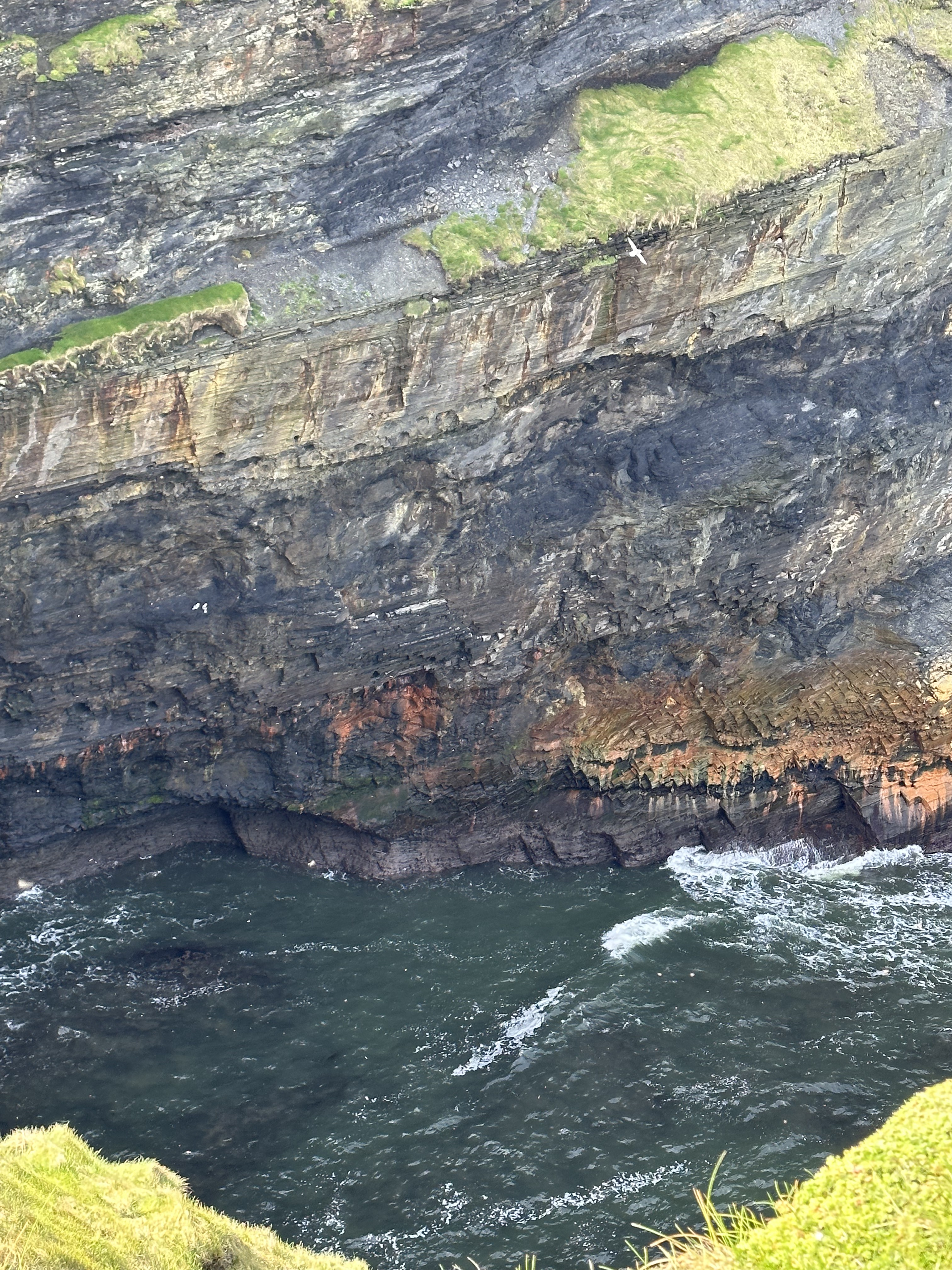
Yesterday we had a long, blissful walk along the Bromore Cliffs near Ballybunion. I can’t really tell you how these voluptuously sculpted cliffs have affected me.

The 180 foot undulating cliffs are magic.

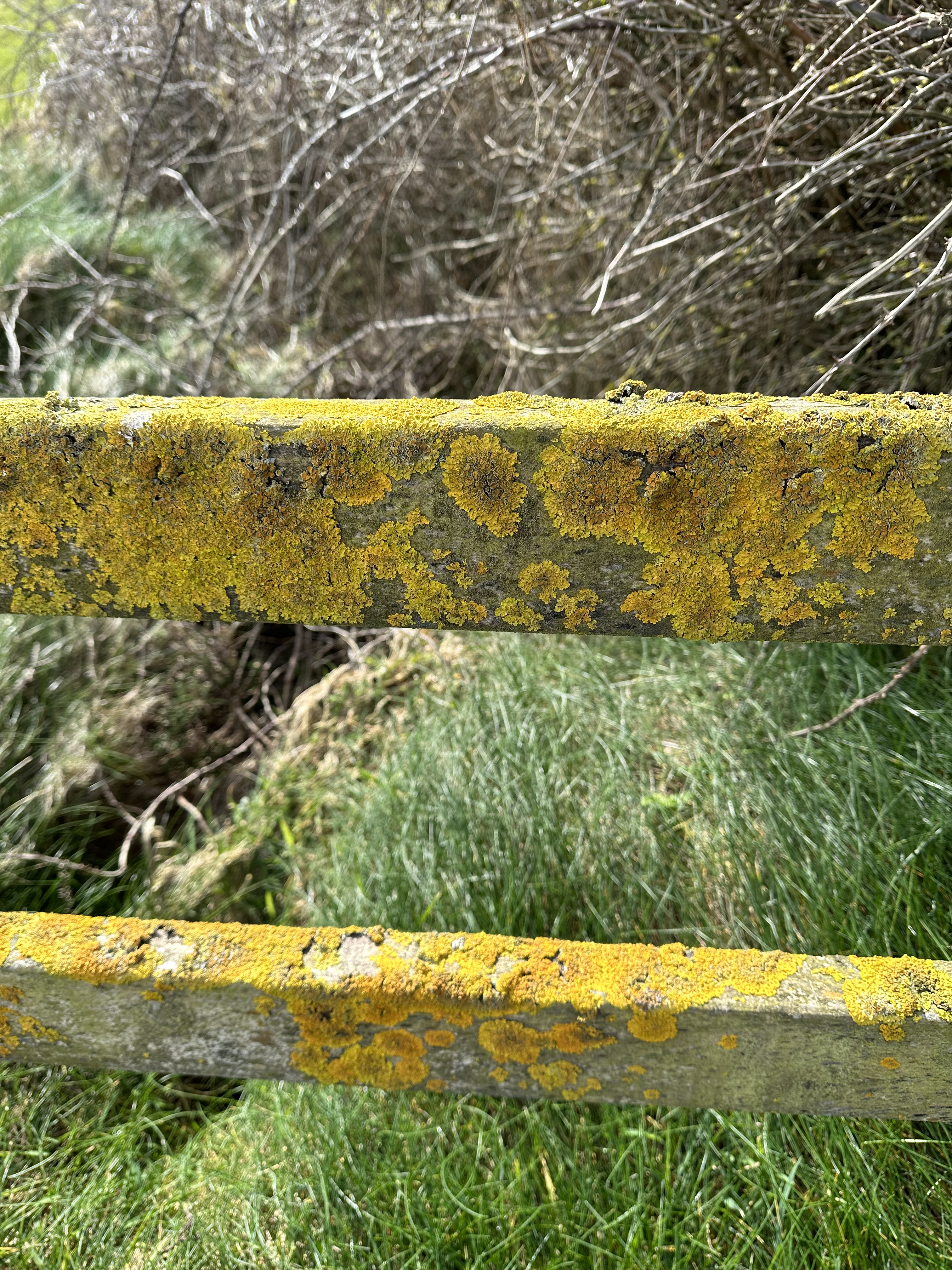
They are life, light, and lichen, striated at angles that show the tumultuous heaves of the earth.

They are water, both calm and screaming, and breath, both soft and harsh against the sandy shore.

They are tiny flowers seemingly too delicate to fight for light and space, and yet they thrive.

They are hope and bliss and longing and celebration and dancing like a hurricane.

They are peace and hope and joy.

They are every one of us.

Inspired by a month-long artist residency graciously provided by Olive Stack Gallery, Listowel, County Kerry, Ireland.

Magic Lives Here

We stepped off the plane in Shannon under a light rain which suddenly stopped (of course!), hopped into the car with Ger, our Guide Supreme, and took off for a wondrous exploration. And I do mean wondrous.

The highlight was a visit to The Grange Stone Circle at Lough Gur (Lios na Grainsi). the largest stone circle (or second largest, depending on who you ask) in Ireland. Built around 2200 BC, this Bronze Age edifice was erected as a ritual site, and also served as an astronomical calendar.

There is evidence of 6,000 years of continuous human habitation. This doesn’t really surprise me; we humans tend to be quite enamored of the mystical.

You’ll notice some spectacular inclusions, including a tree that has grown through two standing stones (not shown in this first post). What you can’t see is that the 113 stones are set into the earth at a depth of up to four feet. The largest stone in the circle is 13 feet high and weighs 2,200 pounds.

How? Did they put progressively larger rocks under the stone and roll them? How many people would this take? How many years? How many burst spleens?

So many questions I can’t answer, and yet I do know this: the men and women who built these stone circles were passionate about their task, and I’m in awe.

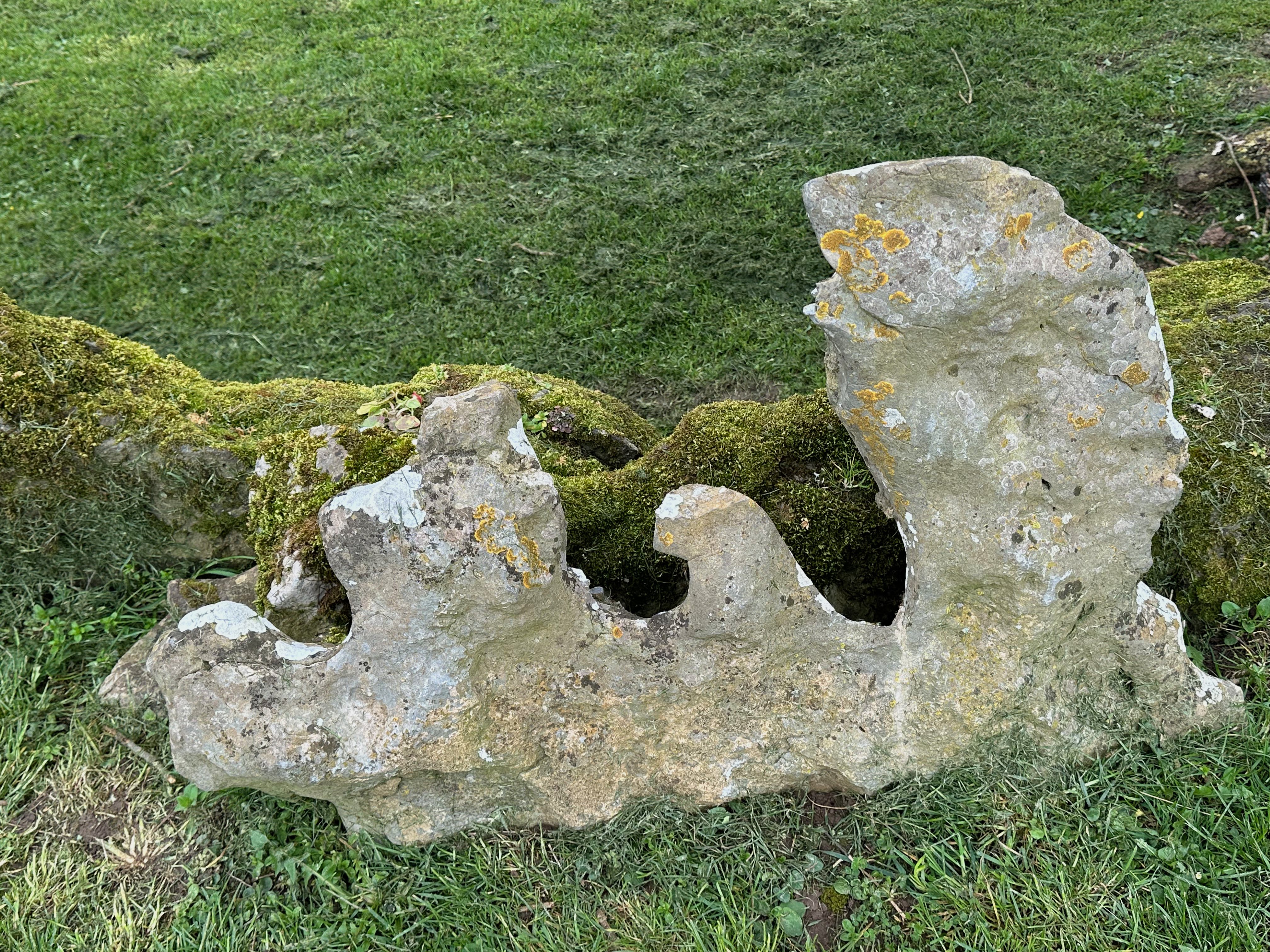
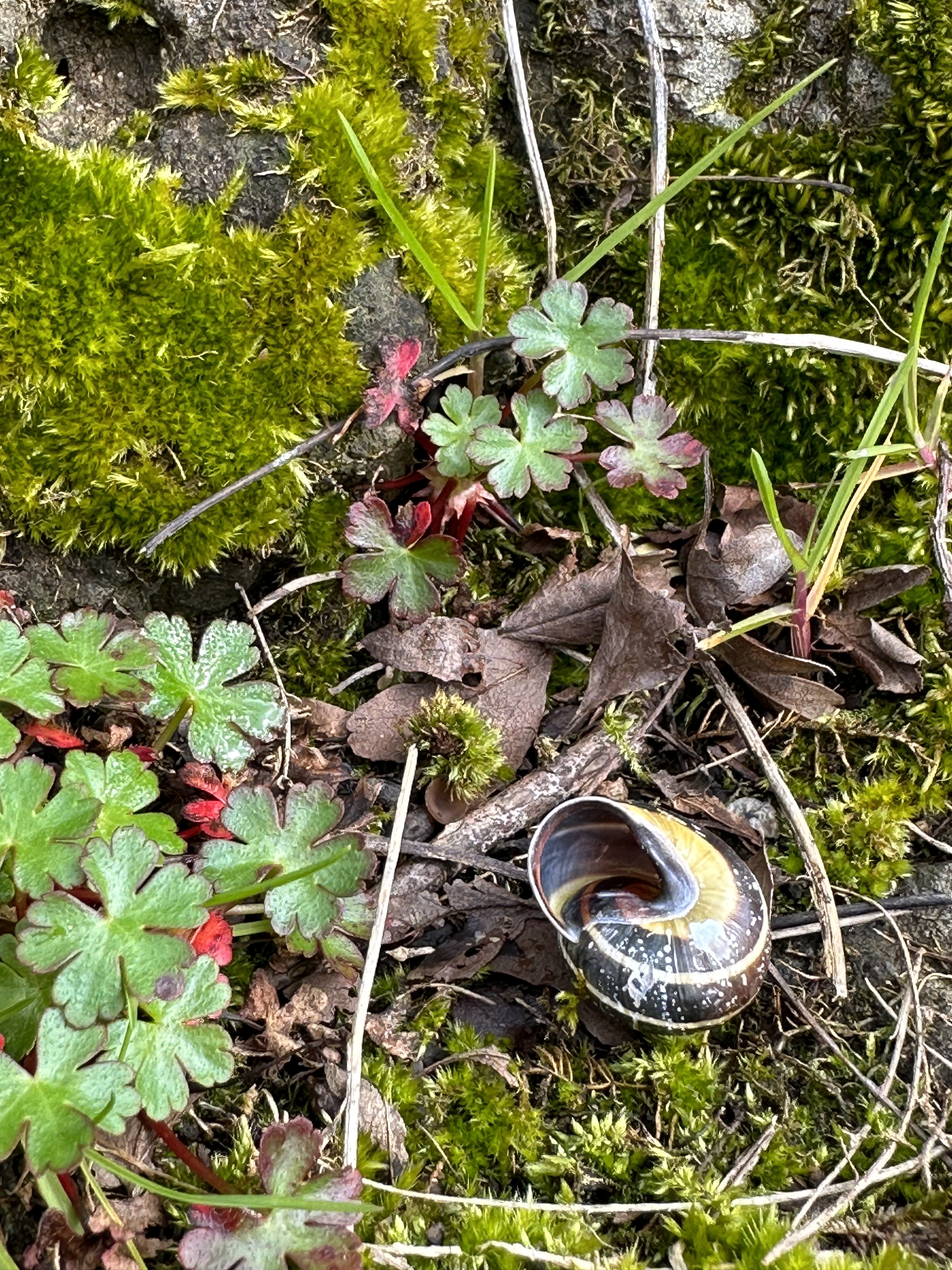
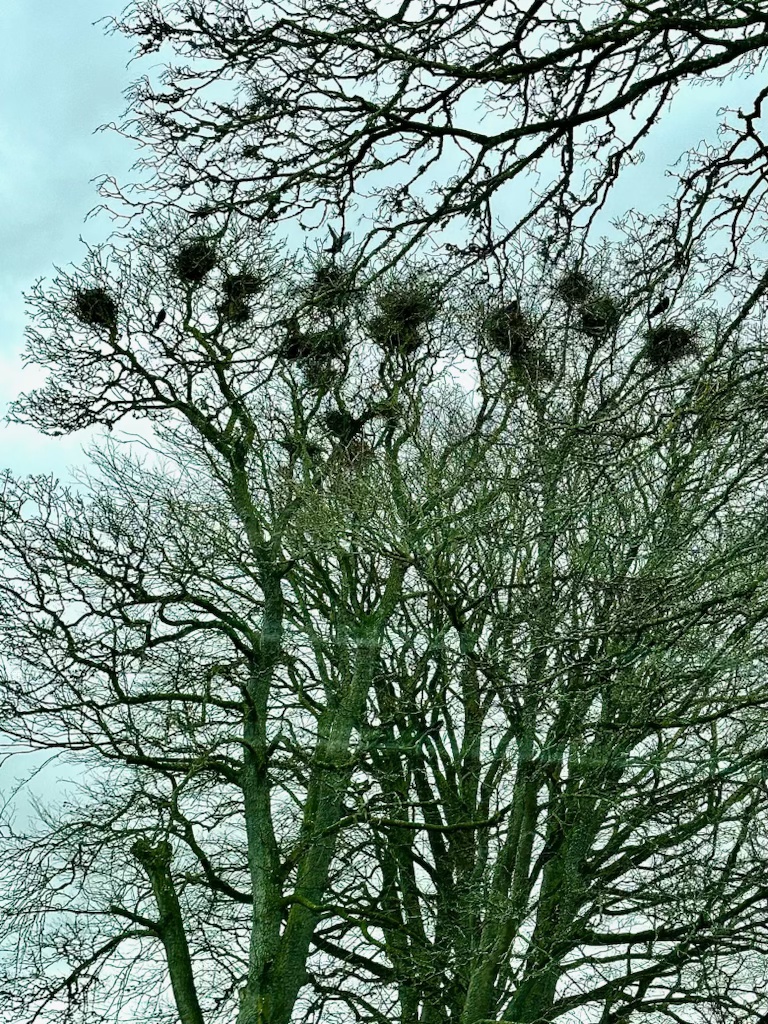
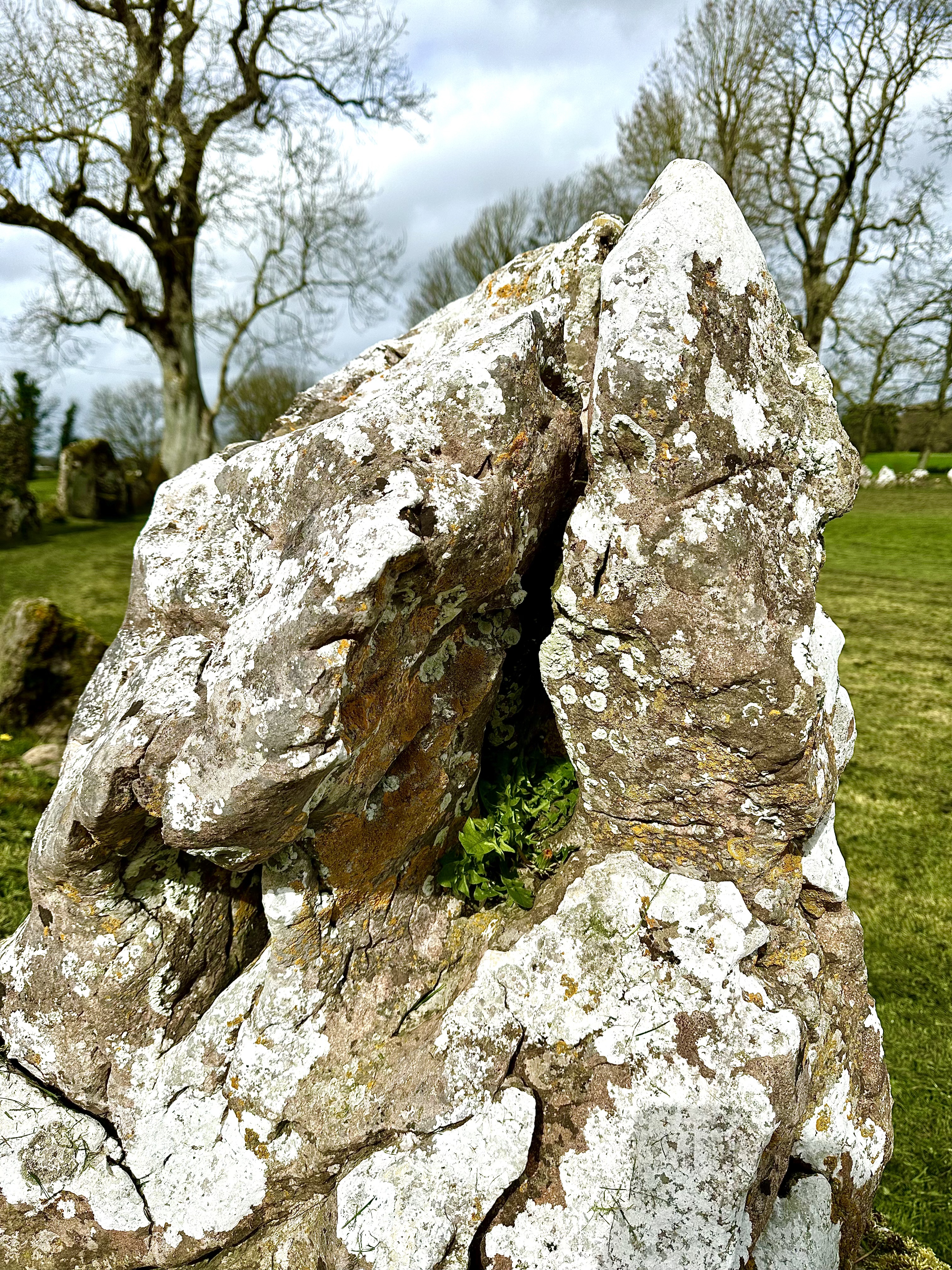
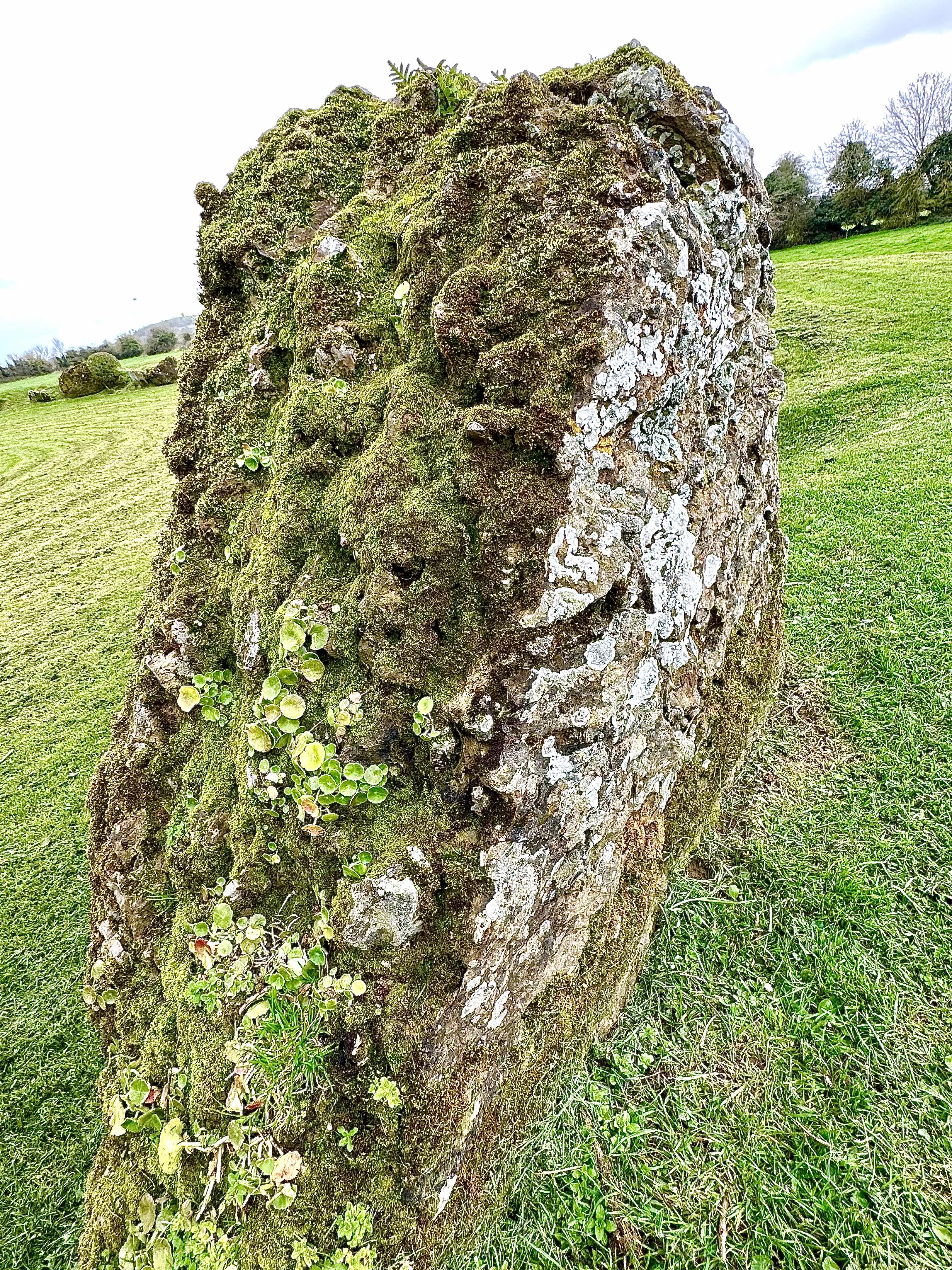
Shown Above: Last year’s nests, which fill treetops everywhere but are only visible during winter; Entrance to the Grange Stone Circle; Long shot of the circle; Beautiful crevice; Moss growing only on the side; Sloped stone with moss loops; Moss with flowers in the crevice.

Inspired by a month-long artist residency graciously provided by Olive Stack Gallery, Listowel, Ireland
Stay tuned!

When Once I Flew So High

I always take a window seat.

I perch lightly

and raise my eyes,

hungry for that first glimpse.

These days the staff busies themselves pulling down shades all in a fever, as if even

a glimpse of the fully present

moon

would turn us all quite into wolves.

We’re sheltered.

Given a set of rules to follow.

Just in case, you know?

I wait and watch and don’t begrudge
the hours of sleep missed. She nourishes …

as women do.

And ohhhh the light when she’s ready!

On an early trip at

20 or so and, solo as usual, I watched the sky

begin to spill her soul

in crimson streaks racing

like wildfire,

carving her name into the universe

moment by moment,

and far too consumed to notice me

or my gaping jaw

as she took the night full force and

just this side

of moonrise.

And I ask you,

is there magic in your soul?

c. Pam Goode