I walked past the fountain three times without realizing it, once even stopping to study the delicate stone right in front of me. She was tucked quietly in a corner surrounded by noise, and my brusque gazes didn’t begin to dream that she held any more significance than a simple violet growing quietly amid rocks.
Rimondi Fountain, they call it. Megali Vryssi: Fountain of Lions. And like an American, I looked in every direction for gargantuan felines, maned and fiercely commanding in a pool the size of a small lake — because that’s how Americans think.
And so of course I had to laugh when I finally saw the eggshell wall carved lightly with a gentle hand during my … wait for it … fourth pass with blind tourist’s eyes. A Venetian sculpture on a wall of Arabic, held erect by Corinthian pillars — an arranged marriage of artists.
I sat in the square to try and know her a bit, and simultaneously watched the tourists’ bulbs explode again and again and again, posing with smiles before this tiny giant of silent survival.
I learned a mountain-full that day.
Note: This 17th century (1629) (300 years before my mother’s birth) was named for Venetian Rector Antonio Rimondi. Also called Mehali Vryssi, the fountains spout from four lions’ heads into a marble basin, making it a virtual time capsule of the city’s history over the last 2,000 years.
The pillars are Corinthian; the lion heads are Venetian; and the back wall is a Turkish restoration. In 1930, the overhead vault was torn down to accommodate motorized vehicles.
Life is strange. Or maybe it’s me. Does it matter which?
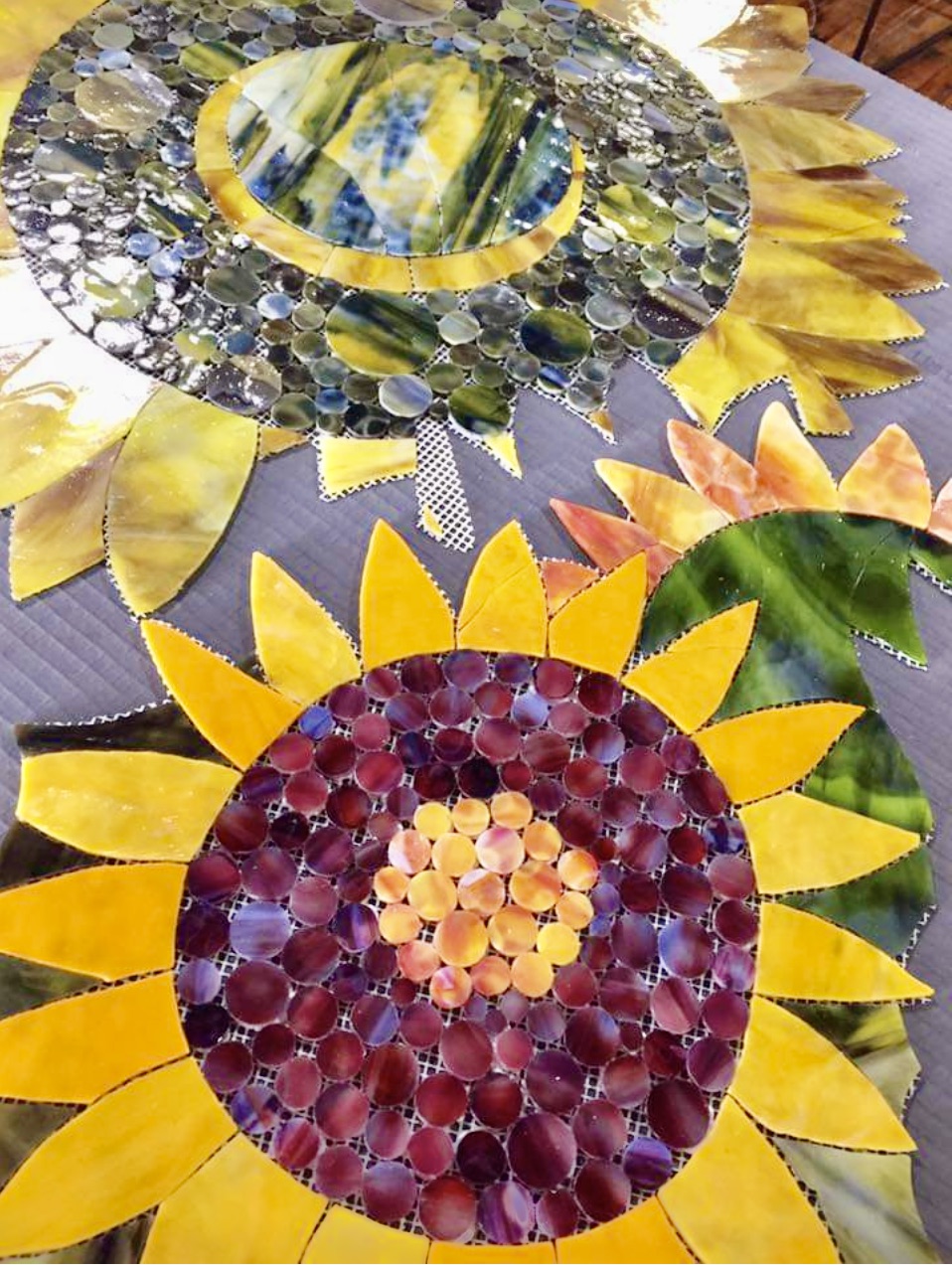
I started making art when I was about 6, which comes so naturally to kids. And then of course I stopped. I stopped, in fact, for 47 years. I was busy doing wonderful things of course, and as a creative type, that never stopped. But mosaic art was to be my future, and I made my first piece at the ripe old age of 30, which, perhaps surprisingly, seems to be the usual path. And suddenly I fell hard. I loved the art form, and it loved me back. This in itself isn’t unusual — it was who I was and, I believed, who I was destined to be.
And then one day some years later, I stopped cold turkey and without a thought to the contrary. I don’t remember if this made me sad or happy. I don’t remember loss. The only change I remember was that I was working on some large pieces for a mosaic flower garden, and it was a kick ass project. I loved it. No matter that I had to drive five and a half hours to make the work/play dates — and then make the drive back home three days later. No matter that the roads were filled with big ass trucks barreling south down the interstate. No matter anything, I was in my fifties, in my prime, and it was pure bliss.
And then it happened like this: I was working at home on a piece, and the large center space was filled with beautiful, ethereal circles that pulled you into a distant paradise. My circles were perfect, and I loved them.
They loved me less. My glass grinder began emitting coughing noises. I added more water and solvent and kept working to make every curve perfection. I bought a new head. I spoke to it sweetly.
But the fingers . . . the fingers that had worked with me so well over so many happy decades …. I simply couldn’t control the budding arthritis in my happily toiling hands, and in a short series of hours, they just stopped working in the flawless way they had always worked. I got it done, delivered the piece and then another, but when I finished, I just walked away. I don’t think I’ve ever walked away before. It’s not who I am, and it didn’t feel right.
A few weeks later, I made it back to Virginia to help with the installation, and spent the weekend laughing and working. It was the best of times, but I knew my mosaic days were numbered, and I didn’t like that one little bit. But what do you do? Give up? Push on? Wait for healing? I chose the latter.
Last week I was teaching a class to a great group, and they were doing so well on their own that I walked over, sat down, … and picked up my tools. I picked up my tools for the first time in years. I looked at them with joy for the first time in years.
And then I started using them. No real pain, no backing off, no icky feelings — I just worked without worry or expectations.
And then I worked the next day.
I worked by myself in the studio. And … I had fun. Some very long-lost fun, and though concessions had certainly been made, it felt good. It felt really, really, REALLY good.
And you know, change isn’t necessarily a bad thing. Some times it’s just what we need. And sometimes it opens whole new worlds just when you needed them.
P.S. These pieces were created to fit together with those of other artists in a community project.
A mother is passing me on the wind, with the shaping, re-shaping of life, of this life, of my life, of our life, in this most fragile fabric of life.
And her whispers hold fast as my worlds careen, shifting wildly at 20, now 30, now 40 and more there than here, and then there, and then here — as I age and I wait and I watch for your song, as I wait and I watch for you there, as I age and I wait and I age and I watch, as I age, and still you do not.
And the time that I opened my soul to the waiting, with winds washing through me, around me, into me, with voices and songs of full ten thousand souls all rushing to soothe and to shape and to soothe for this fast-coming onslaught of loss, always loss,
as I’m filling my mind with the stories and songs of love and of life and of change, — too much change — and I knew, of course,
it was here.
A mother is passing me on the wind as she reaches once more for my hand, and I know …. and I know, and I know, and I don’t want to know, not so soon, not this soon, not this soon, but I know.
And the ashes fly slowly through peace and through tears as she takes to the sea that she loves — on the wind, with the wind, kiss the wind as she swirls, as she flies her way out to the sea, to the sea, as she clings to the sea, to the sand, to the the sky, and all of heaven between — as she sings her hello and goodbye and hello,
When I first made this trip 20+ years ago, we traveled across the Pan Am Highway, her roads broken into car-sized holes that slowed the journey considerably. It didn’t bother me an ounce, because travel teaches us truth. And during every visit since, I’ve watched Costa Rica blossom in so very many beautiful directions. I pray it will always be so.
And now, once again, we’re here! First, we’ll enjoy a beautiful three-hour journey through the countryside. Along the way, we’ll pass small houses with colorful laundry hanging, stalls selling creches and life-size deer figures, and vast fields of sugar cane. The backlit fronds of the cane will compete for our attention with their feathery tufts.
The roads are hilly and winding, with lushly planted homegrown guardrails of Dracena protecting against the steepest drops. Fortunately, traffic is mild. A small white dog trots up the road; a hilltop palm missing most of its fronds arcs leeward in the mist. I spy a rounded tree literally covered with white birds — at least 50 of them — and again, I wonder.
Halfway through the drive, we stop for coffee and the skies open wide for the twenty minute afternoon rain. When we pile back into the van, mist has settled onto the hairpin turns taking us down the mountain, but not enough to obscure the drive of banana, coffee, bougainvillea, citrus trees, dracena, palms, unfamiliar tropical fauna with giant leaves in every shape, blooming brush, and one surprising stand of three-needled pines.
Bridges become more frequent as we cross rocky streams and rivers, each path only one-laned, making a gentle dance of transport vans and the occasional bus or truck. Most of the locals walk, wisely against the traffic but still along the road with neither sidewalk nor shoulder for safety. Small signs advertise local businesses: “Many Meaty Dishes. All Meatless. All Tasty.” The rafters of a porch along the roadside support 20 bunches of bananas hanging by ropes. We pass through several small towns, and as the 5:00 sunset moves in, the people double in number — there is so much walking through the nightfall, and I hope hard that each arrives home safely.
We reach Finca Luna Nueva at what seems like 10 or 11 PM, though it is actually closer to 6:00, and we ascend the gravel just as moonstain moves in, spreading her welcome across the sky.
The lovely ladies of the lodge feed us well — offering chicken with saffron rice, soup, organic spinach, juices and salad from the farm, and I’m fast asleep before 9:00, tucked away in my little cabin with Costa Rican breezes blowing through.
I pray it will always be so.
P.S. Twenty years of visiting Costa Rica regularly, and I’ve never, ever tired of it. Bring it on in January 2024!
I’d like to make a friendly suggestion that you expand your idea of the “ultimate sin” past prostitution and adultery. While I won’t argue that either pastime is a virtue, your chosen references strike me as sexist and narrow minded. I know you must certainly have a broader vision than that. Right?
And let me just say that your sermon was HUGELY sexist and HUGELY narrow-minded. In fact, I’m appalled.
I’m particularly offended by references to Jesus forgiving “even prostitutes.” Oh yes, please let’s forget the murderers, rapists, thieves, liars, and mean people.
So here’s the thing: do you think a woman invented prostitution?
When men cheapen love and sex by reducing women to a commodity purchased (or stolen) from strangers, why is the woman the sinner? Where has she learned this minuscule value of her love?
As for adultery, I guess it’s a popular ingredient of sermons simply because it’s the one sin that pretty much everyone can relate to on one level or another. You say we can’t turn away from adulterers, but you’ve also said that adulterers should be refused communion. Really? Wouldn’t the “Christian” path be that of forgiveness, understanding, love, and comfort?
And why, WHY, would you, as a “holy” man, possess the right to turn away any person who’s coming to God? And why would you want to?
More women please. We have a “slightly” (read “massively”) broader view.
Not the beating, but the breath of a motor, nearly silent, alerts me and I turn to see into myself, and into you, and into this wild universe faintly suggesting life …. a tiny boat sputters along without lights this moonless night … black sky, black sea, black mountains … black, black, black is everywhere. It scares me just a bit and yet he moves … a man at peace alone in the vast.
The weather here is capricious, dancing from warm to cool to humid to breezy on a whim. Showers are so light they almost pass detection — they simply whisper by and are gone in a breath, and it’s something like watching a play while seated onstage — you feel everything from the joy to the spit.
The changing weather reminds me I’m on top of a mountain both physically and emotionally — not Everest, to be sure, but high enough to be face to face with changing currents not only of air and nature, but also the currents of thought and emotion within me. Nothing is static here.
Up at 5:45, I’ve already missed the sunrise. I walk to breakfast early to do some writing, and all nine of us are already there, ready to take on the day. We scarf down eggs cooked with tomato, beans and rice, half-dollar-sized cornmeal cakes, rustic bread, buffalo cheese (fabulous), buffalo yogurt, and carambola (starfruit) jam.
As soon as I finish, I miss the tastes.
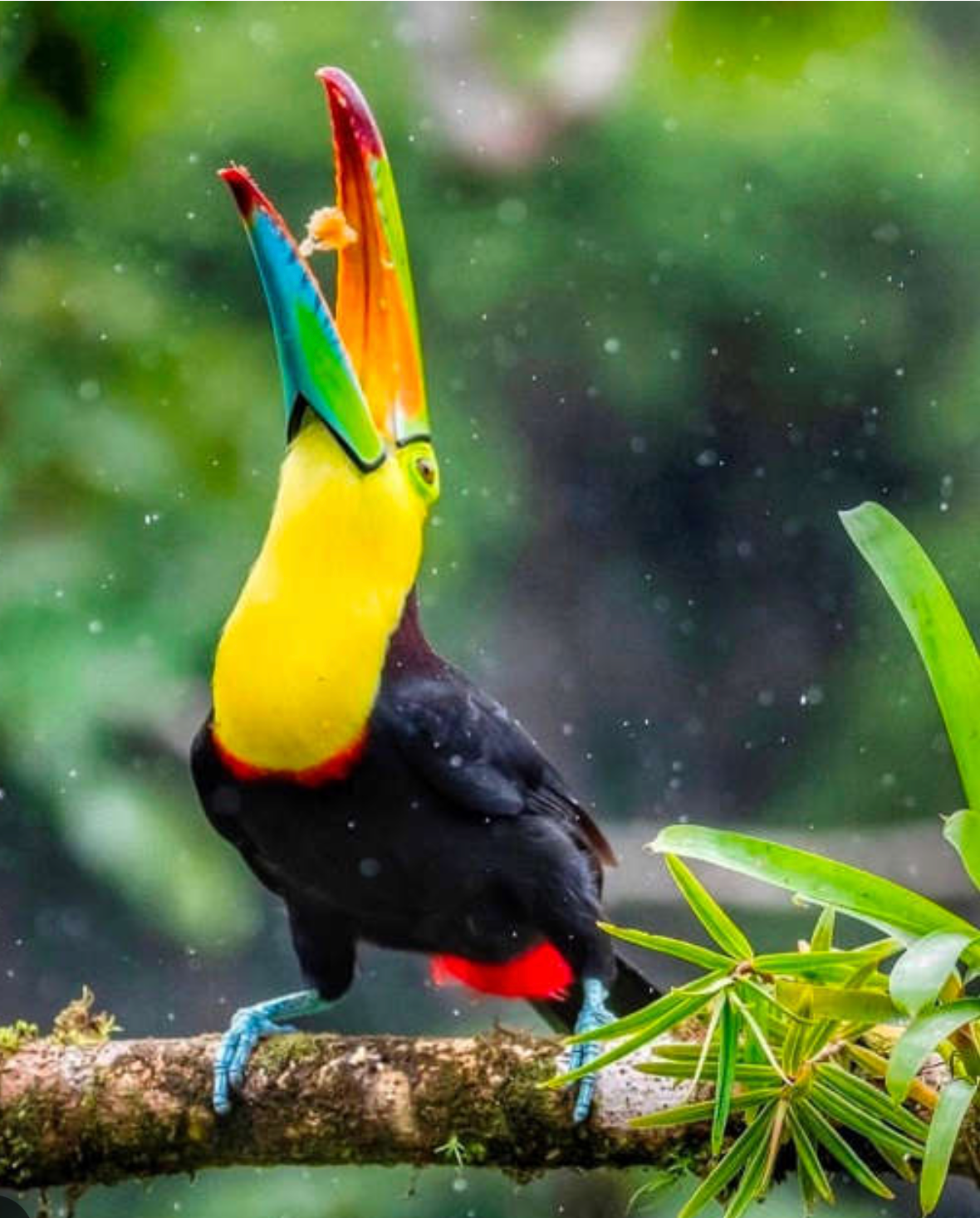
By 9:00 we’re gathered for our tour of the organic farm, and before we hit the path, our guide Ishmael has already shown us a tree full of toucans (yesterday a flock of parakeets flew overhead); jackfruit, which can weight up to 75 pounds and often hangs bulbously and pimpled in an unseemly flop between forks in the tree; and the fruit of the Lipstick Tree, a beautifully freakish hairy and crimson pod used to color lips, cheddar cheese, fingers (oops) and cheetos.
Just beyond, Ishmael moves beneath a large bush, reaches both hands overhead to grasp an oblong yellow fruit, and begins twisting it on the stem until it snaps. About a foot long, this is cacao — the mother of chocolate. Smashed once against a trunk, the pod opens to reveal a white slime which we’re encouraged to taste, and it is deliciously sweet/tart with the faintest hint of bitter chocolate.
Later, Ishmael hands us the halves of several nerf-ball-sized green orbs with fleshy spikes, with a thicker white goo-ish interior. This is anonas, or custard apple, also known as ice cream fruit, and the most sublime mouthful I’ve ever tasted. I eat more than my share — scooping out the custard with my fingers and licking it up eagerly.
We pass drying racks for the cacao beans, used for chocolate smoothies onsite, hives for sting-less bees, an organic kitchen garden for the open air dining hall, papaya trees, the seed-starting greenhouse, the compost house where waste is buried in horns to add calcium to the soil, and a tasting table for ginger and turmeric, the two primary crops. The turmeric root is more orange than the spice — a WAKE-UP orange — and those who nibble it for a sample spend the rest of the day with orange teeth. Turmeric, which fights inflammation, is also as an antiseptic, and has antioxidant, antiviral, and anti-tumor properties, as well as being used as a dye for the saffron-colored robes of Buddhist monks. It would be a lovely landscape plant in any garden.
After a perfectly-cooked lunch of coconut-crusted white fish, we’re off on the rainforest path through a secondary-growth stand. The path is mossy and moist, with miniature fairy plants cascading across the forest floor and skinny sun-seekers so tall I can’t see their tops. In between, greens tangle across and upon and below each other, taking root in the most inane of places. Philodendrons and ferns and mosses and every type of epiphyte line the trunks from here to there, and when I look up, I can watch a single drop of moisture fall from the canopy high above me right down to my toes.
It’s like walking through a wonderland, except that nothing here exists for show. Every plant or insect has a purpose, and it’s a big one, symbiotic and natural. Wish it were so easy for humans.
It’s Halloween! It’s Halloween! It must have been that lucky bean That raced me round and round and round — My magic feet still on the ground, Still chasing socks and rocks and blocks, And ticking tocks — It’s HALLOWEEN! And I’m a tad more weary now, Just one more race …. I’m snoozing now.
For my little Charlie Barley on his second Halloween.
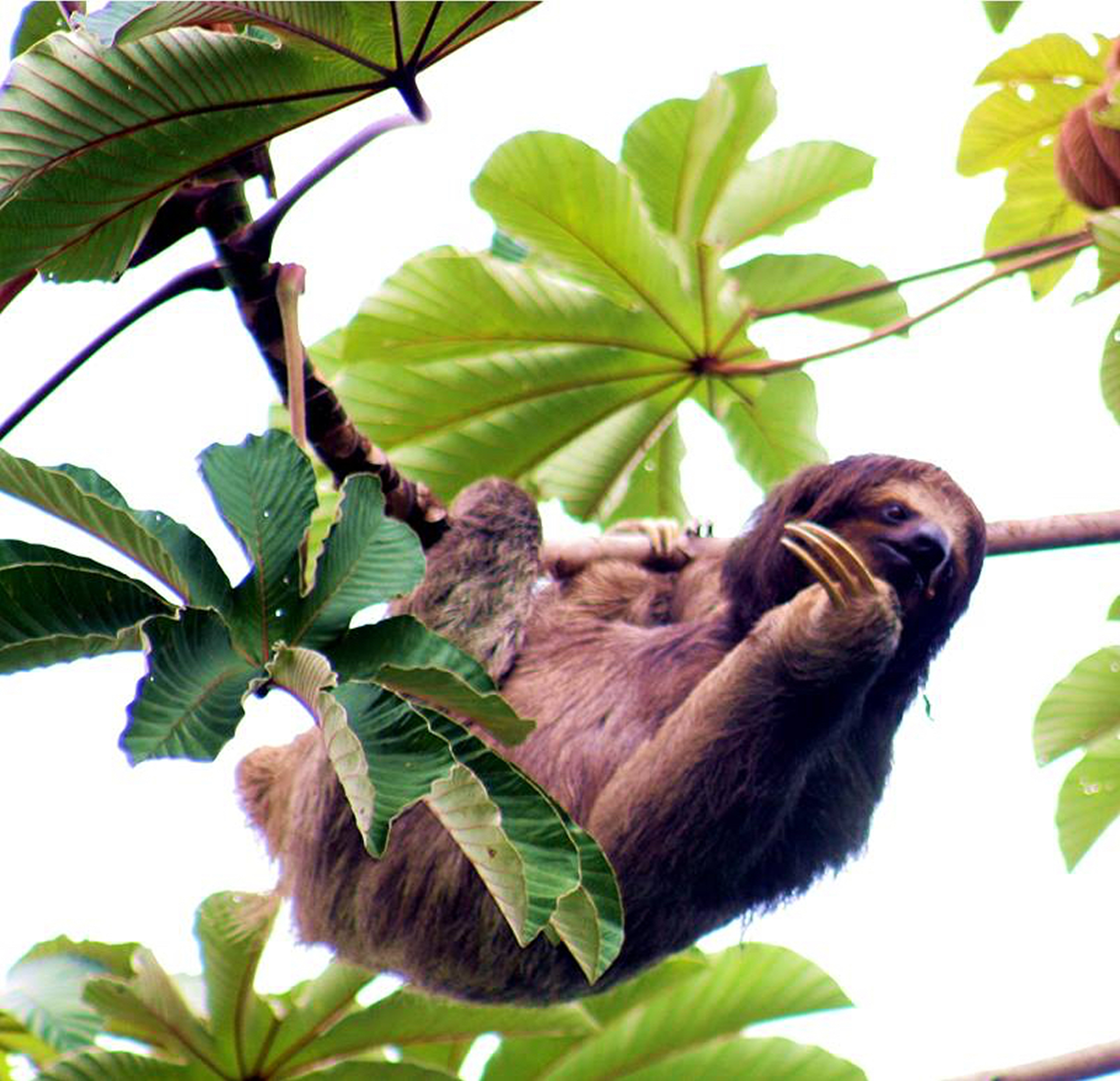
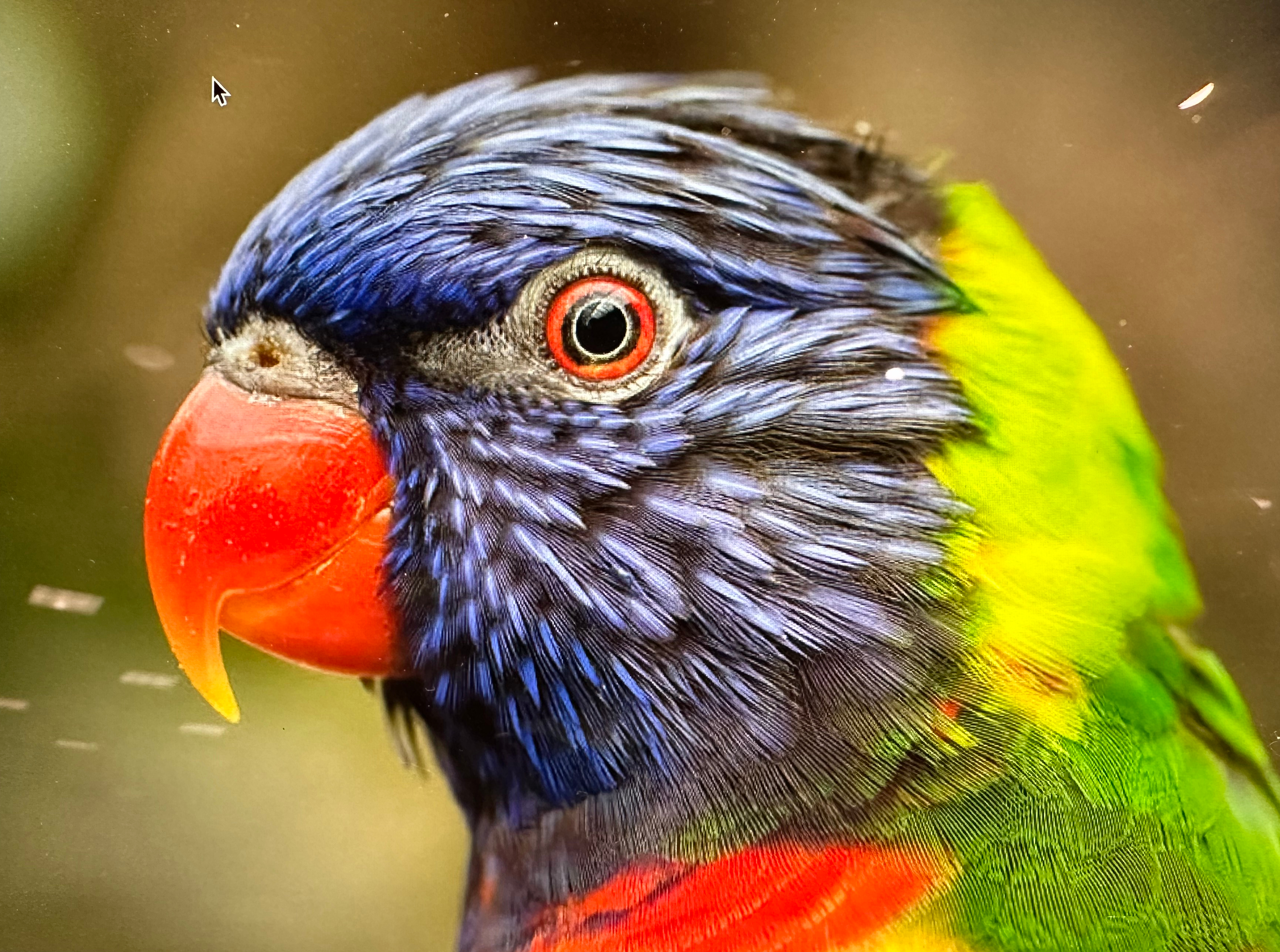
Did you know that Costa Rica is home to over 948 species of birds? Wikipedia notes that seven are native (three of which are found only on Cocos Island), 90 are rare or accidental, and four have been introduced by humans. Another 73 are “almost” native with ranges that include only Costa Rica and Panama. Twenty-seven species, including five of the seven natives, are globally vulnerable or endangered. Over an area smaller than West Virginia, this is the greatest density of bird species of any continental American country. About 600 species are resident, with most of the other regular visitors being winter migrants from North America.
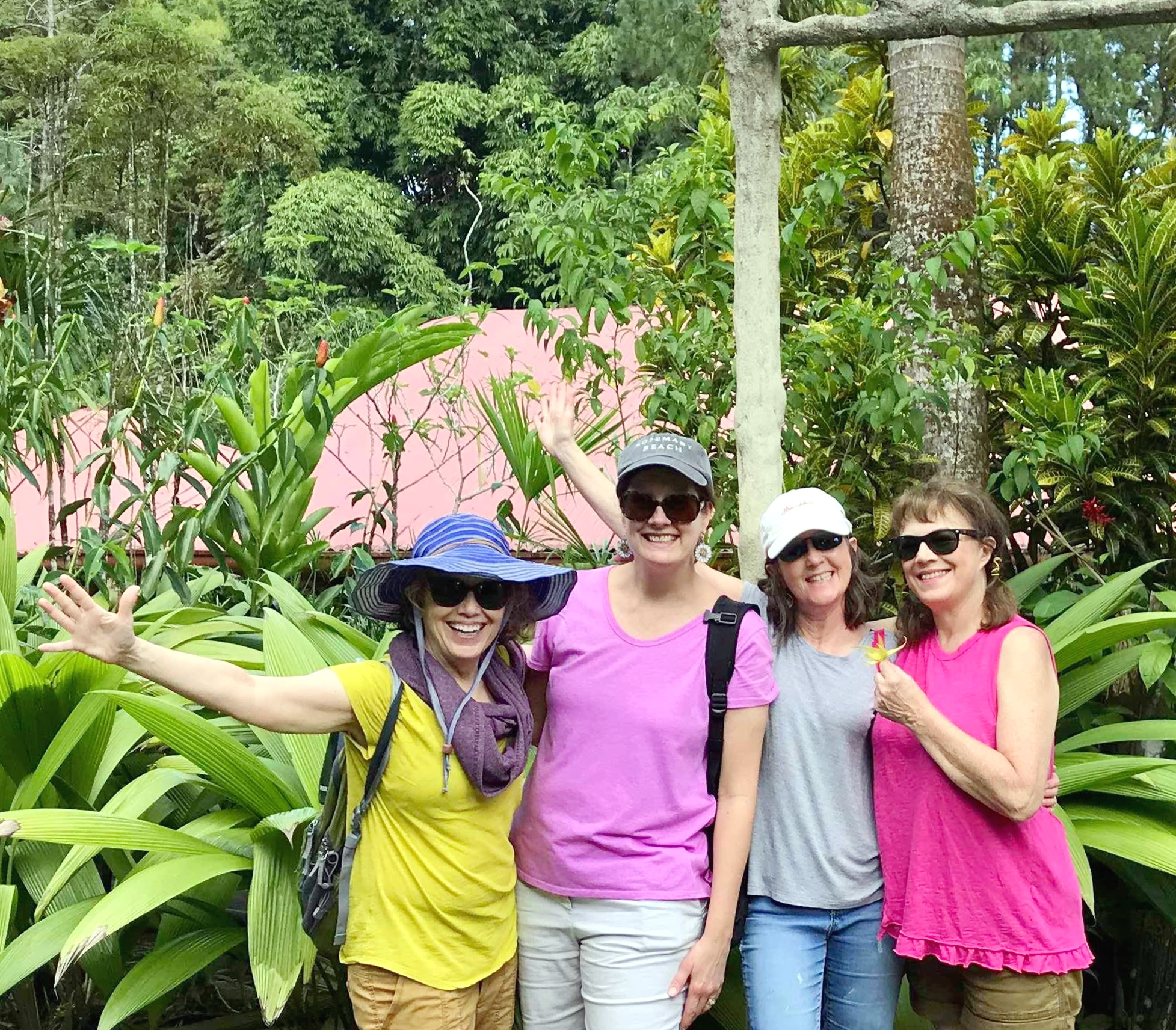
Okay you’re right — they’re not all birds, but they’re definitely all very, very cool. This will be my gazillionth trip taking a bevy of girls to Costa Rica, and I’ve never gotten tired of it even for an instant.
And a fun little side note: The only bird that can fly backwards? The hummingbird.










 Pam Goode Writes