
The weather here is capricious, dancing from warm to cool to humid to breezy on a whim. Showers are so light they almost pass detection — they simply whisper by and are gone in a breath, and it’s something like watching a play while seated onstage — you feel everything from the joy to the spit.
The changing weather reminds me I’m on top of a mountain both physically and emotionally — not Everest, to be sure, but high enough to be face to face with changing currents not only of air and nature, but also the currents of thought and emotion within me. Nothing is static here.
Up at 5:45, I’ve already missed the sunrise. I walk to breakfast early to do some writing, and all nine of us are already there, ready to take on the day. We scarf down eggs cooked with tomato, beans and rice, half-dollar-sized cornmeal cakes, rustic bread, buffalo cheese (fabulous), buffalo yogurt, and carambola (starfruit) jam.
As soon as I finish, I miss the tastes.
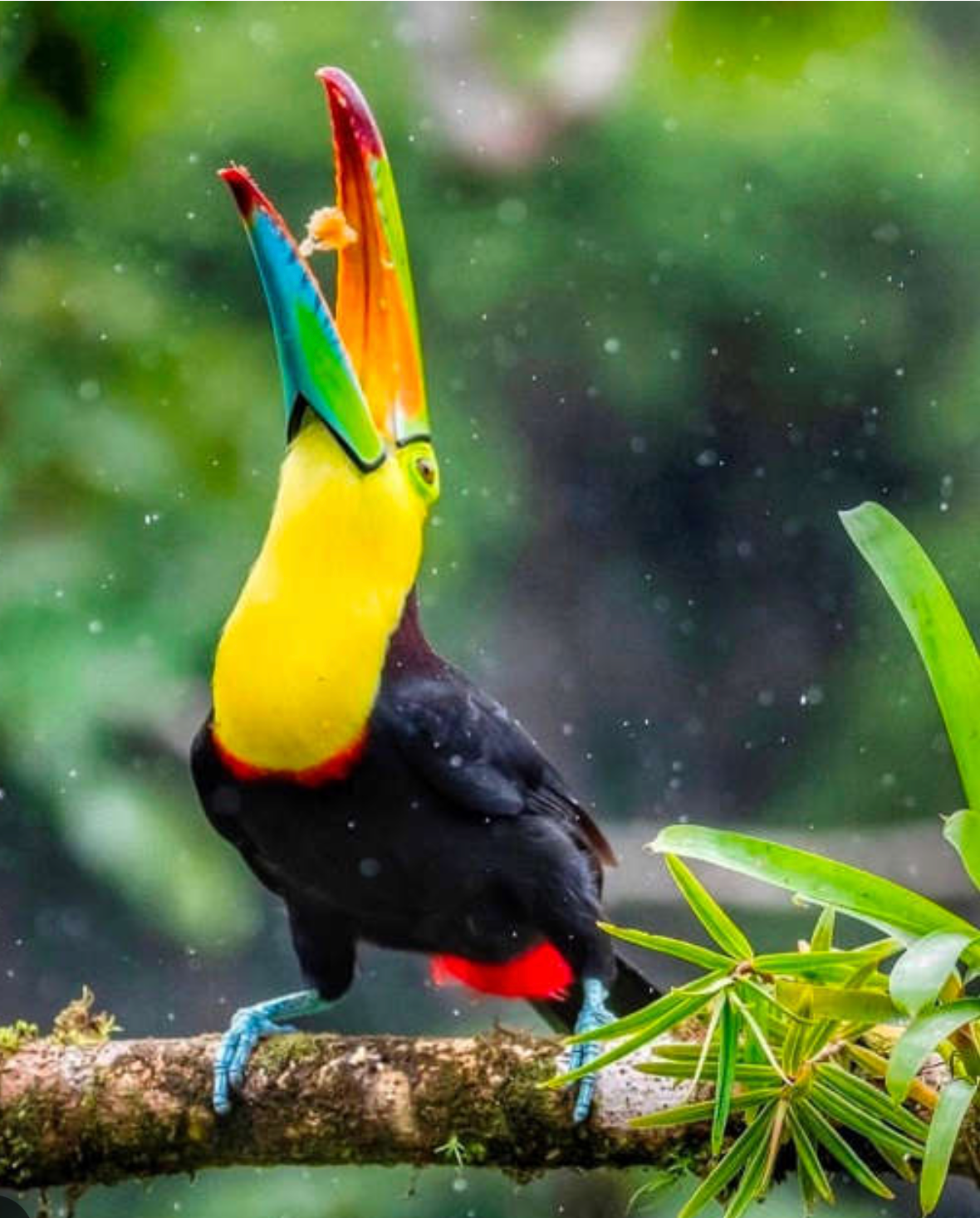
By 9:00 we’re gathered for our tour of the organic farm, and before we hit the path, our guide Ishmael has already shown us a tree full of toucans (yesterday a flock of parakeets flew overhead); jackfruit, which can weight up to 75 pounds and often hangs bulbously and pimpled in an unseemly flop between forks in the tree; and the fruit of the Lipstick Tree, a beautifully freakish hairy and crimson pod used to color lips, cheddar cheese, fingers (oops) and cheetos.
Just beyond, Ishmael moves beneath a large bush, reaches both hands overhead to grasp an oblong yellow fruit, and begins twisting it on the stem until it snaps. About a foot long, this is cacao — the mother of chocolate. Smashed once against a trunk, the pod opens to reveal a white slime which we’re encouraged to taste, and it is deliciously sweet/tart with the faintest hint of bitter chocolate.
Later, Ishmael hands us the halves of several nerf-ball-sized green orbs with fleshy spikes, with a thicker white goo-ish interior. This is anonas, or custard apple, also known as ice cream fruit, and the most sublime mouthful I’ve ever tasted. I eat more than my share — scooping out the custard with my fingers and licking it up eagerly.
We pass drying racks for the cacao beans, used for chocolate smoothies onsite, hives for sting-less bees, an organic kitchen garden for the open air dining hall, papaya trees, the seed-starting greenhouse, the compost house where waste is buried in horns to add calcium to the soil, and a tasting table for ginger and turmeric, the two primary crops. The turmeric root is more orange than the spice — a WAKE-UP orange — and those who nibble it for a sample spend the rest of the day with orange teeth. Turmeric, which fights inflammation, is also as an antiseptic, and has antioxidant, antiviral, and anti-tumor properties, as well as being used as a dye for the saffron-colored robes of Buddhist monks. It would be a lovely landscape plant in any garden.
After a perfectly-cooked lunch of coconut-crusted white fish, we’re off on the rainforest path through a secondary-growth stand. The path is mossy and moist, with miniature fairy plants cascading across the forest floor and skinny sun-seekers so tall I can’t see their tops. In between, greens tangle across and upon and below each other, taking root in the most inane of places. Philodendrons and ferns and mosses and every type of epiphyte line the trunks from here to there, and when I look up, I can watch a single drop of moisture fall from the canopy high above me right down to my toes.
It’s like walking through a wonderland, except that nothing here exists for show. Every plant or insect has a purpose, and it’s a big one, symbiotic and natural. Wish it were so easy for humans.

























 Pam Goode Writes